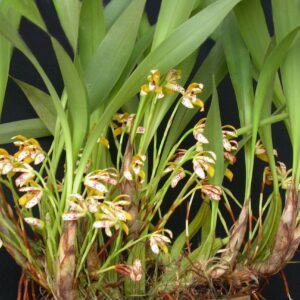
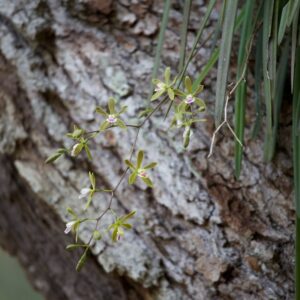
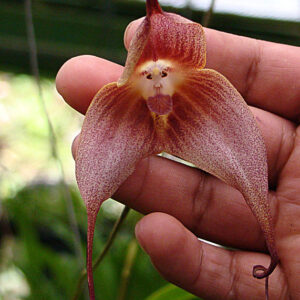
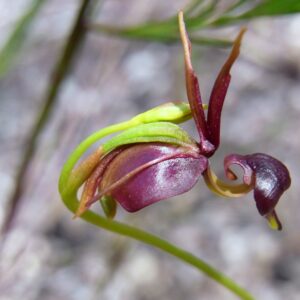
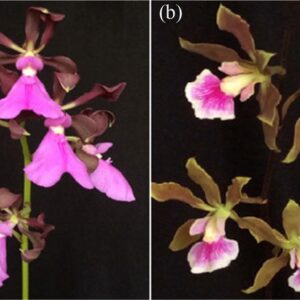
A spray of small flowers can make an Oncidium look like a cloud of dancing figures. That is the appeal behind “dancing lady orchid” and the Brazilian name chuva-de-ouro, or golden shower. The important detail comes before any watering advice: these names cover a varied group, not one plant with one set of needs.
Oncidium, Gomesa and the name on the label
Some orchids long sold as Oncidium now have another accepted name. One example is Oncidium varicosum, accepted by Kew as Gomesa varicosa. It is an epiphytic orchid with pseudobulbs, native to parts of South America including Brazil. That change does not make an old label useless: keep both names when researching your plant. It does mean that a guide to the broader Oncidium group should not pretend that every yellow-flowered orchid is this species.
Pseudobulbs are swollen stems at the base of the plant. They help explain its clumping form, but they are not permission to neglect its roots. When buying, ask for the species or hybrid name and whether it is a warm- or cool-growing type. A photograph of yellow flowers alone is not a reliable answer to those questions.
Choose a position for the growing group
Warm-growing types generally suit a bright place with protection from intense sun. The RHS gives approximately 18–25°C by day and 13–17°C at night as guidance for this group. Keep air moving without a cold draught. These are useful reference conditions, not a promise that every hybrid thrives at the same temperature.
Cool-growing types, including orchids historically sold as Odontoglossum, need a different approach. The RHS highlights cooler conditions, filtered light and higher humidity; some are challenging in a heated room. Do not place an unidentified plant in hot direct sun merely because another Oncidium tolerated it. Ask its grower rather than guessing from flower colour.
Water the roots, not the calendar
The American Orchid Society stresses that water requirements vary with leaf and root type. Observe how quickly your medium dries rather than watering every Tuesday. Water thoroughly, let excess drain, and avoid keeping foliage wet. During active growth, a breathable medium that holds some moisture is more useful than either a constantly soggy pot or repeated severe drying.
The Canadian Orchid Congress advises watering actively growing intergeneric hybrids as the medium begins to dry but remains slightly damp. It favours low-mineral water and warns against water from salt-based softeners. Its advice is for hybrids, not a universal rule for every species. When growth slows, reassess moisture use instead of automatically keeping the summer routine.
Repotting, feeding and the next flowers
Repot when the medium has deteriorated or new growth no longer has space. The American Orchid Society recommends timing this with new growth, when fresh roots can establish. Keep room in front of the newest shoot rather than pushing it against the rim. This is also a good moment to inspect roots carefully, not to divide a weak plant simply to obtain more pots.
For warm-growing types, the RHS recommends a loose bark-based orchid medium, light feeding during growth and removing spent flower stems at the base. If dividing an established clump, keep at least three pseudobulbs in each division. Use clean tools. Follow the fertiliser product’s instructions; do not stack several feeds because flowers are slow to appear.
Read symptoms before choosing a treatment
A wrinkled pseudobulb can mean insufficient water, but it can also mean roots are no longer working. The Orchid Society of Great Britain recommends checking root health. Burnt leaf tips can be associated with fertiliser salts or hard water; dropping buds may follow sudden temperature changes or drying during development. Those signs are clues, not diagnoses. Check the growing conditions before reaching for a pesticide.
During routine inspection, look under leaves and around new shoots. The RHS lists aphids, mealybugs and spider mites among possible problems, with slugs and snails also affecting greenhouse plants. Identify what is present before selecting a treatment. A generic recommendation to spray fungicide for every leaf spot is not a substitute for diagnosis.
Let the display fit the plant
Give the flower spray space against a plain background, perhaps on a stand near a suitable window. A decorative outer pot can hide the growing pot, but remove it for watering and drain it before replacing it. A darker shelf may look attractive in a photograph; it is not automatically a good permanent home. If you are comparing orchid habits, see our guide to Dendrobium types and seasonal care.
Cover: Oncidium-group orchid photographed in Fiji by Cristina Seaborn, Unsplash, used under the Unsplash License. Resized. The photograph does not establish a particular species or hybrid.
Usamos cookies em nosso site para fornecer a melhor experiência de uso, lembrando suas preferências e visitas repetidas. Ao clicar em “Aceitar”, concorda com a utilização de TODOS os cookies.
Este site usa cookies para melhorar sua experiência enquanto você navega pelo site. Destes cookies, os cookies que são categorizados como necessários são armazenados no seu navegador, pois são essenciais para o

funcionamento das funcionalidades básicas do site. Também usamos cookies de terceiros que nos ajudam a analisar e entender como você usa este site. Esses cookies serão armazenados em seu navegador apenas com

o seu consentimento. Você também tem a opção de bloquear esses cookies. Porém, a desativação de alguns desses cookies pode afetar sua experiência de navegação.
Os cookies necessários são absolutamente essenciais para o funcionamento adequado do site. Esta categoria inclui apenas cookies que garantem funcionalidades básicas e recursos de segurança do site. Esses cookies não armazenam nenhuma informação pessoal.
Quaisquer cookies que possam não ser particularmente necessários para o funcionamento do site e sejam usados especificamente para coletar dados pessoais do usuário por meio de análises, anúncios e outros conteúdos incorporados são denominados cookies não necessários. É obrigatório obter o consentimento do usuário antes de executar esses cookies no seu site.