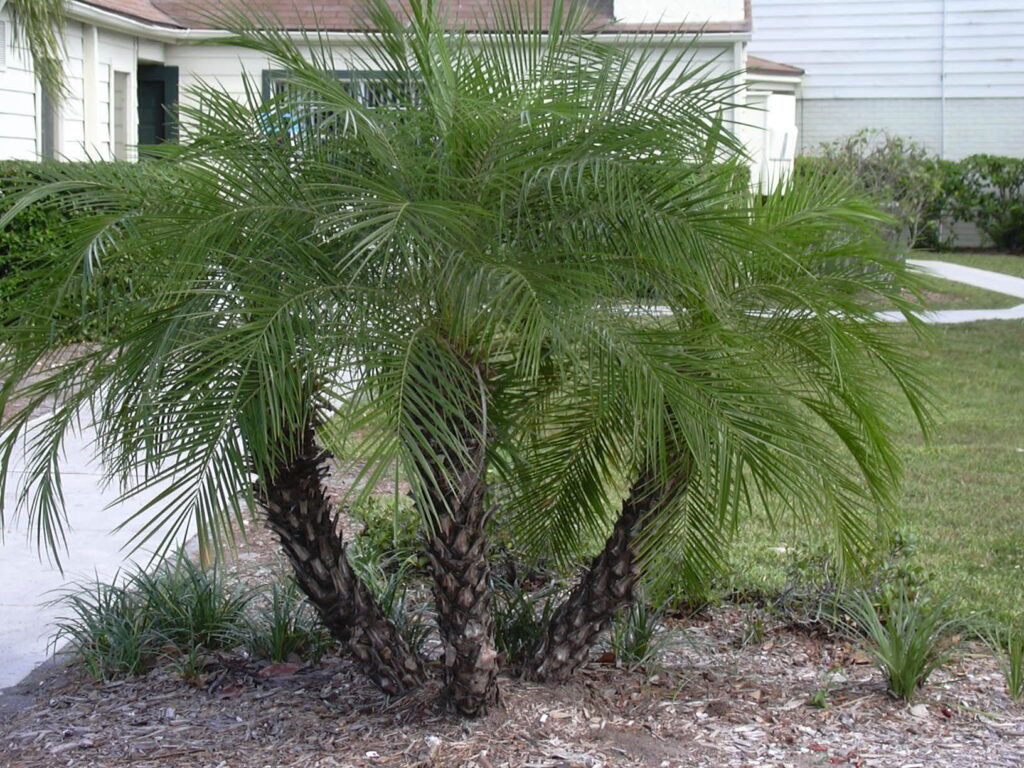
The pygmy date palm, Phoenix roebelenii, gives a garden the outline of a much larger palm in a more manageable size. A slender trunk and arching, feather-like fronds make it useful as a focal point in a warm garden or a large container. Its soft-looking foliage, however, hides sharp spines: choosing the right position matters as much as watering.
Small does not mean tiny
This Asian member of the palm family is also called miniature date palm or dwarf date palm. It is not the commercial date palm, Phoenix dactylifera. Established outdoor specimens can reach several metres, so allow room for both the trunk and the spreading crown rather than planning around the size of a young nursery plant.
Plants are often sold in groups of closely spaced individuals. That arrangement creates several trunks without making the plant a shrub that can be clipped back at will. The small pale flowers are followed, on pollinated female plants, by dark fruits. Male and female flowers are borne on separate plants.
Position it with the spines in mind
The leaflets nearest the base of the fronds form hard, sharp spines. Keep the palm away from narrow paths, doors, seating edges and children’s play areas. A decorative container should not put these spines at face height beside a chair or walkway.
Wear suitable protective clothing and eye protection when working around the crown, and avoid reaching blindly between fronds. If safe access is difficult, use a qualified gardener rather than trying to force your way through the foliage.
Sun outside, generous light indoors
Outdoors, it can grow in sun or partial shade where the climate is suitable. A plant raised under cover should be moved gradually into stronger light. Indoors, choose a very bright location with protection from scorching hot sun; it is not a good choice for a dim corner simply because it is sold as a houseplant.
Protect it from frost and cold drafts. A palm in a pot can be moved into shelter before cold weather, provided that the move can be made safely. Do not assume that a cover will make an unsuitable outdoor climate safe for the plant. Coastal gardens also need care: this is not a palm to select for regular salt spray.
Planting and watering
Good drainage is essential. In a container, use a suitable free-draining potting mix and drainage holes. In the ground, assess how water moves through the planting area before digging. Adding a little sand to a planting hole is not a reliable cure for a poorly drained site.
Keep the top of the rootball at the appropriate existing soil level rather than burying the trunk. Water after planting and monitor the root zone while the plant establishes. Mulch can help conserve moisture, but keep it clear of the trunk.
Aim for moisture without prolonged saturation. Check the soil or potting mix before watering, and let excess water escape. Hot weather and active growth may increase demand; cool conditions and slower growth usually reduce it. A fixed calendar is less useful than observing the actual drying rate.
Do not cut yellow leaves automatically
A yellowing frond is not always a pruning problem. UF/IFAS describes potassium deficiency as a common issue in this palm, especially in Florida, and warns against removing affected leaves while they are still alive: the plant can draw on their remaining nutrients.
Remove fully dead fronds carefully, but do not strip the crown to “stimulate growth”. Investigate drainage, planting depth and nutrition if several leaves deteriorate. A fertiliser chosen mainly for high nitrogen is not automatically suitable. Seek a balanced palm-feeding programme appropriate to your soil or container, and follow the product label rather than copying a regional formula without context.
Propagation and routine checks
Seed is the usual route for producing new plants. Use mature, properly cleaned seed and a suitable moist, airy sowing medium in warm conditions. Germination time varies; avoid promises that every seed will sprout within a set number of days.
Inspect leaves for mites and scale insects, especially under cover. Identify the cause before treating: homemade detergent sprays can damage foliage and are not substitutes for a labelled product. If treatment is necessary, use only a locally authorised option for that pest and ornamental use.
Sources and photograph
UF/IFAS Extension: Phoenix roebelenii, revised 2024; Royal Horticultural Society: miniature date palm; NParks: Phoenix roebelenii.
Cover photograph: Forest & Kim Starr, Phoenix roebelenii, Wikimedia Commons, CC BY 3.0. Original photograph, unaltered.