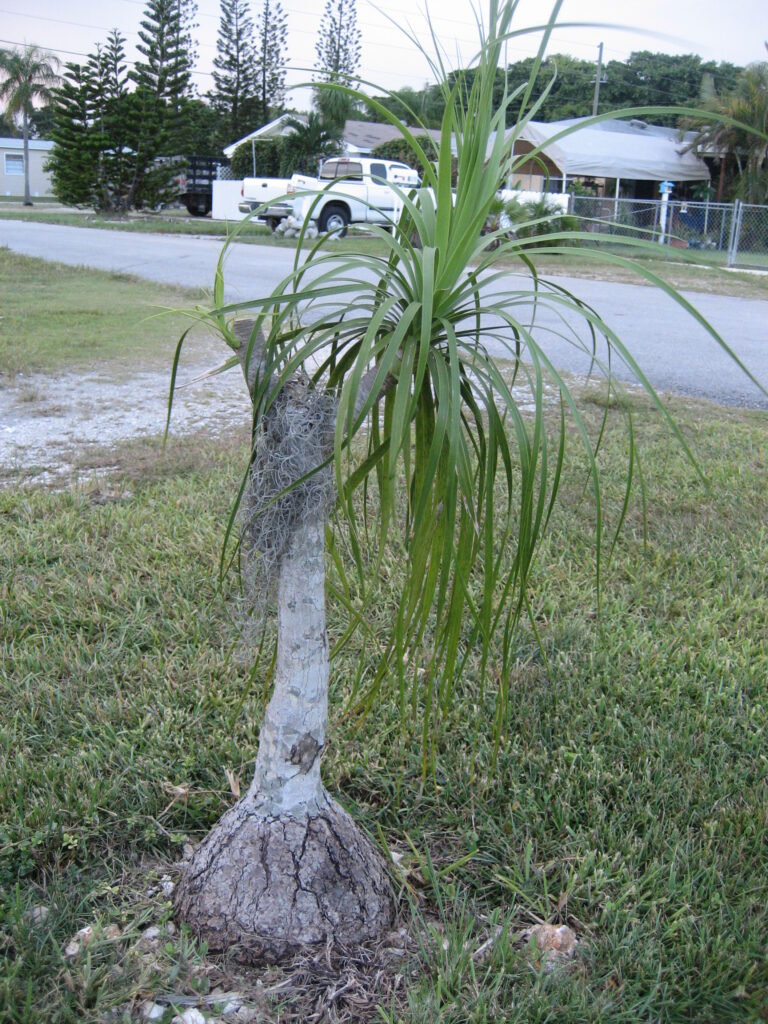
Ponytail palm (Beaucarnea recurvata), also called elephant’s foot, combines a swollen trunk base with long, arching leaves. It makes an eye-catching container plant and, in a suitable frost-free climate, a distinctive garden specimen. Its slow growth is part of its appeal: it does not need constant pruning to keep its shape.
Despite the common name, it is not a true palm. This Mexican plant stores water in its enlarged stem base, or caudex. Understanding that reserve makes its care easier: a bright position and careful watering matter much more than frequent attention.
Choosing a place indoors or outside
Give it plenty of light. Indoors, choose a bright window rather than a dim corner chosen only for decoration. Outdoors, it can grow in a sunny position, but introduce a plant raised in shade to stronger light gradually. Protect container plants from frost.
Allow room for the leaves to arch freely. A mature garden specimen needs more space than a small nursery plant suggests. In a pot, growth remains much more restrained; do not expect it to reach its outdoor size quickly.
A pot that lets water escape
Use a container with drainage holes and an airy, free-draining growing mix. A heavy, waterlogged substrate defeats the purpose of those holes. Avoid leaving the pot standing in a full saucer or decorative outer container after watering.
Repot when the roots genuinely need more space, not simply because a calendar says another year has passed. Choose a modest increase in pot size and handle the base carefully. A very large volume of wet mix around a small root system makes moisture harder to manage.
How often should you water?
Check the mix rather than following a fixed weekly routine. Let it dry between waterings, then water and allow the excess to drain. Reduce watering in cooler periods when growth slows. Light, temperature, pot size and substrate all change how quickly a container dries.
Brown leaf tips do not by themselves prove the plant needs more water. Before changing the routine, inspect the substrate and the base. Persistent wetness and a soft trunk are warning signs; adding more water can worsen a root problem.
During active growth, use fertilizer sparingly and follow the product’s directions for container plants. Extra fertilizer will not compensate for poor light or inadequate drainage. There is no reason to combine several feeding schedules.
Leaves, flowers and routine care
The fountain of narrow leaves is the main ornamental feature. Remove completely dry leaves carefully, but avoid trimming healthy foliage into a rigid outline. Inspect the leaves and their bases for pests before bringing a new plant close to the rest of your collection.
Flowering is unusual indoors. Mature outdoor plants may produce large flower clusters and can flower again: flowering is not a sign that the plant has reached the end of its life. The species also produces fruit, so it is inaccurate to describe it as a plant without fruit.
Propagation and responsible buying
Propagation is possible from seed or by rooting suitable offsets, as described by the Royal Horticultural Society. This is not the same as dividing a rhizome. For a home gardener, buying an established, nursery-grown plant is often simpler than attempting to separate a small shoot with little root growth.
Choose a healthy plant from a reliable nursery and keep its identification. Similar silhouettes and common names can be misleading. With a good position and a restrained watering routine, ponytail palm can remain a striking feature without demanding daily intervention.
References and photograph
NC State Extension: Beaucarnea recurvata; Royal Horticultural Society: cultivation and propagation; NParks: botanical characteristics.
Photograph: Chris Green (Chrisg21090), Beaucarnea recurvata, via Wikimedia Commons. Released into the public domain by the author; reused without modification.