Kew Gardens in London combines the pleasure of walking among plants with a chance to understand what a botanic garden does. Trees, beds and glasshouses belong to an institution that studies, identifies and conserves plant diversity. A visit becomes richer when you look beyond an unusual specimen’s photograph to the relationships between plants, environments and people.
For home gardeners, including those in Brazil, Kew offers a useful lesson: know what you grow. Identification, origin, growing conditions and records can transform a collection. That does not require a Victorian glasshouse or rare plants, just attention to familiar species and the decisions that keep them healthy.
From royal garden to scientific institution
Kew’s official timeline dates Princess Augusta’s botanic garden to 1759. In 1840 it passed from the Crown to government and opened to the public. The Palm House was completed in 1848, and the Temperate House opened in 1863. These milestones connect landscape, architecture and science.
The history also involves travel, plant exchange and imperial relationships. Recognizing this context avoids treating collections as if they appeared from nowhere. Asking where a plant came from and how it arrived extends the experience beyond appearance.
Today’s scientific role is not limited to historic buildings. Living collections require management, documentation and conservation priorities. What visitors see is part of a wider effort involving research and collaboration. Beauty can be an entry point into understanding that work.
Kew Gardens and Wakehurst are different destinations
Royal Botanic Gardens, Kew manages two distinct gardens. This article concerns Kew Gardens in London. Wakehurst is in West Sussex and houses the Millennium Seed Bank. The official seed-collections page explains the location and distinguishes public experiences from restricted research facilities.
A story about the seed bank does not mean it is a short walk from the Palm House. Do not use one garden’s calendar to plan the other. Check which name appears when consulting tickets, addresses, transport and accessibility.
Treat collection totals carefully too. The living-collection information covers Kew and Wakehurst, so institutional totals should not automatically be assigned to London alone. More important than memorizing a number is understanding how a documented collection differs from decorative planting.
What to notice in the living collections
Labels are part of the experience. Look for botanical names and the information provided. Similar-looking leaves do not prove that plants are closely related; close relatives can look very different. Photograph the label together with a view of the plant without touching or moving anything.
A name-only photograph can become confusing among dozens of records. If an identification remains uncertain, record that uncertainty instead of spreading an incorrect name in your own photographs or posts.
Look below the tallest plants. Trees and palms draw attention through scale, but low-growing plants, leaf details and shade relationships reveal other strategies for occupying space. A thoughtful visit is not measured only by the number of extraordinary specimens seen.
This can inspire layered planting at home, provided light and mature dimensions support it. Putting low plants under a dense canopy does not guarantee they will thrive. Appearance is only one part of a successful garden design.
A collection is not permission to collect. Fallen seeds and apparently unnecessary leaves still belong to the garden. Do not remove material, move labels or cross barriers. A plant’s scientific value may not be obvious, and responsible visitors protect both collections and staff working conditions.
Glasshouses: architecture supporting cultivation
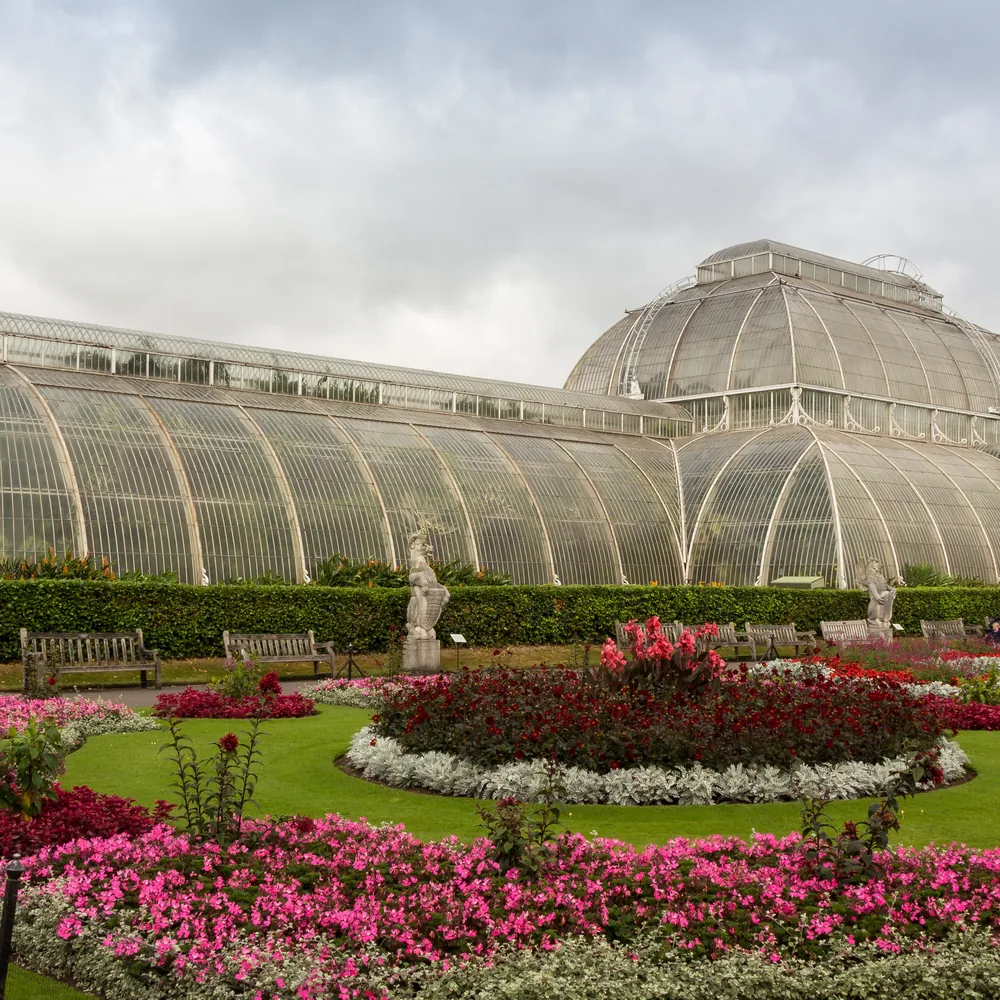
The Palm House is one of Kew’s best-known sights, but its role goes beyond architecture. Glasshouses provide conditions for plants that could not simply live outdoors in London. Seeing a species there does not establish that it tolerates the local winter without protection.
This distinction matters when using international photographs as inspiration. Check whether a plant was growing under protection before buying the same species for an exposed balcony. Strong sun, wind and temperature can make your setting entirely different. A garden’s address does not describe every microclimate inside it.
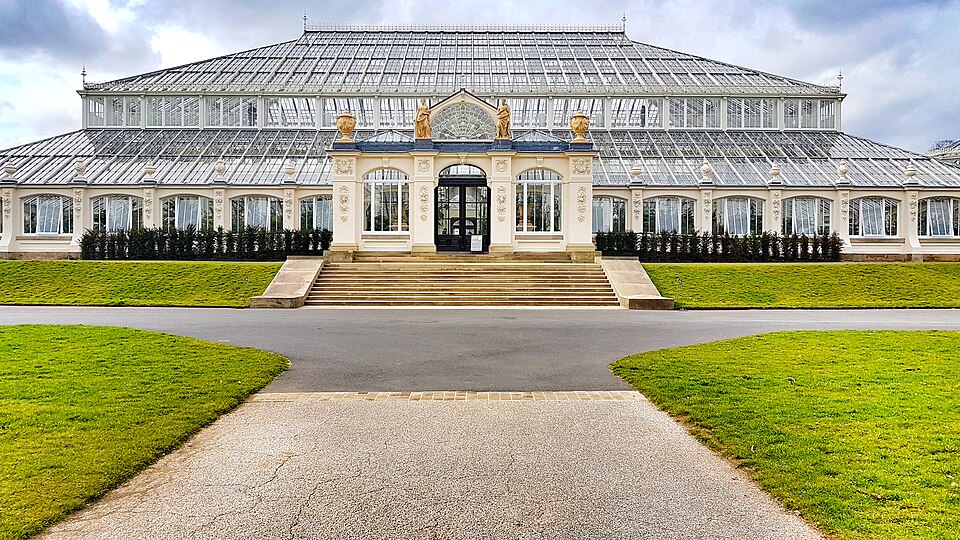
The Temperate House offers another perspective on cultivation and conservation. Glasshouses do not all serve the same purpose or maintain identical conditions. Read the interpretation and notice how plants from different regions are presented.
Check the Palm House renovation before travelling
Checked on 17 November 2026, Kew’s plans included closing the Palm House in February 2027 to complete plant removal, briefly reopening the empty glasshouse in the British summer, then closing again for renovation in autumn 2027. Check the official renovation page before travelling; older photographs do not confirm access.
Conservation work can change the route, plant locations and how long to spend in each area. Plan alternatives from current notices. The historical featured photograph records the building’s appearance, not its availability on your visit date.
Plan a visit with time to observe
Kew’s official visitor pages cover tickets, opening times, transport, accessibility and notices. Consult them close to your date. This article does not fix prices or assume every attraction is open throughout the garden’s opening hours.
Choose an entrance that fits your transport and intended route. Check the full journey to the gate rather than relying on a station name. If mobility, fatigue or sensory needs matter, review current accessibility resources and plan breaks. A suitable route is more valuable than trying to cross every area.
Choose two or three interests, such as trees, glasshouses or plant identification. Check closures before leaving and again on site when needed. Stay on permitted routes, respect barriers and do not touch plants unless expressly allowed. Do not feed animals or leave litter, and keep paths clear while photographing labels.
Allow time for a less spectacular area. Comparing leaves and growth patterns for a few minutes may teach more than rushing through many attractions. A botanic garden rewards attention, not just distance walked.
Lessons to bring home
Identify before expanding. Make a simple inventory of your plants: known name, source, growing position and identification questions. A notebook with dated photographs is enough. Seek reliable botanical sources or qualified help where identification affects safety or care.
This matters especially before treating a plant as food, a home remedy or something accessible to pets. Appearance and common names do not establish safety. The useful lesson from a botanic garden is to value verifiable information rather than leap from resemblance to a conclusion.
Choose for the conditions you can provide. Observe sun at different times, airflow, drainage and what happens in rain. A covered balcony can differ greatly from a bed on the same property. Group compatible needs and leave room for growth, rather than trying to correct a basic mismatch with constant watering or pruning.
Use legally sourced plants and suppliers who can identify them. Where appropriate, consider species native to your region while respecting their requirements and adult size. Do not remove wild plants to build a private collection; conservation and decoration do not justify unauthorized collecting.
Record failures as well as successes. Monthly photographs and notes on watering, growth and flowering help reveal patterns. Record moves and interventions so you do not attribute a result to the wrong cause. After a decline, compare light, moisture and potting conditions before assuming more fertilizer is needed.
Not every difficulty calls for another product. Poor drainage, an unsuitable pot or an incompatible species may be the real issue. A small, well-understood and healthy collection can be more rewarding than many plants without adequate care.
Frequently asked questions
Is the Millennium Seed Bank at Kew Gardens in London? No. It is at Wakehurst in West Sussex. Plan that destination separately and check access arrangements; laboratories and technical areas are not automatically open to visitors.
Will the Palm House be open when I travel? Check the renovation page and current visitor notices for your dates. Earlier accounts cannot confirm present access.
Can glasshouse plants grow outdoors? It depends on the species and destination climate. Confirm temperature, light, moisture and space requirements rather than relying on a photograph.
Can I take seeds found in the garden? Do not remove collection material. International movement of seeds and plants also involves plant-health requirements. Take photographs and notes instead.
Do I need botanical knowledge to enjoy Kew? No. Start with simple questions: what is the plant called, where does it occur and how does it occupy space? Labels and interpretation help curiosity grow at your own pace.
A garden that stays with you after the trip
Kew’s influence may appear months later when you identify a plant correctly or decide against buying one that will not suit your space. Connecting beauty with knowledge and care is the lasting lesson, whether you have a balcony, a yard or a small collection of pots.
Featured image: Rafa Esteve, Kew Gardens – Palm House, Wikimedia Commons, CC BY-SA 4.0. Photograph from August 2016; square crop, resizing and WebP conversion, adaptation under the same license. Historical image, not confirmation of current building access.