Before a trip, resist the urge to give every plant extra water. A plan depends on how long you will be away, what you grow and how fast each pot dries in its usual spot. Start watching your plants before you pack.
Start by watching how your pots dry out
In the days before you leave, note which pots dry first and which stay damp. Number or label them so you can plan for groups instead of treating the whole collection alike. How long will you be gone? Can someone get in if needed? What will the light and temperature be like while the house is closed?
Observe pots where they will actually stay. A small fern, a large foliage plant and a succulent may behave differently in the same room. Pot size and material, potting mix, root volume and heat affect drying. Group plants that can follow their usual routine, those that will need more water, and those that need individual attention. Give unfamiliar plants closer supervision rather than assuming they can go a set number of days.
For a short trip
If a plant already needs water, its usual thorough watering followed by full drainage may be enough for a short absence. Check the mix first and empty any outer pot or saucer. There is no universal watering interval.
Keep each plant in suitable light. A normally bright room may be dark once the shades are closed. Avoid sudden moves into deep shade or hot sun, and check drafts and heat near glass.
Wicks, reservoirs or drip systems: test them first
A wick or mat can carry water to the potting mix, but the rate varies with the mix, the setup and how much the plant uses. Test with the actual pots and mark the water level. Check moisture and leaks. Don’t leave pots sitting in a basin of water: that can damage the roots of many plants.
What to check when you compare options
Wick: Check that the material carries water to the mix and both ends stay in place.
Capillary mat: Check contact through the drain holes and confirm water reaches pots farthest from the reservoir.
Self-watering pot: Use a setup you already know. Avoid repotting the whole collection just before a trip.
Dripper or bottle: Check the moisture in the pot, not just whether drops are coming out, and make sure the setup stays stable and leak-free.
Run the test where the pots will stay. Note the start time, water level and moisture, then check each pot. A full reservoir can mean little demand or that no water is getting through. Test long enough to observe a usual interval between waterings. If there’s no time, ask someone to check in rather than relying on an untested system.
For a long trip, arrange visits
A plant sitter can spot an empty reservoir, a closed window or a tipped-over pot. Show the person how to check moisture, and leave photos and instructions by pot or group. Ask them to check with you before adding fertilizer, applying treatments or moving plants.
A checklist for your plant sitter
Find it: Pot number, photo and intended location.
Check first: Where to feel for moisture and what indicates a need for water.
Water and drain: Usual method, a safe place to drain, and when to empty the outer container.
Write down: Visit date, which pots were watered, reservoir levels and leaf changes.
Get in touch: Leaks, an empty reservoir, a wilting plant in wet mix, a tipped pot or a major change.
Set visit intervals around the plants that need the most attention. Confirm access and a backup plan. If the sitter is unsure about extra water, ask for a photo first.
Mistakes to avoid
Don’t soak pots to make water last, substitute misting for watering the mix, or rely on a system you didn’t test. Cover reservoirs against insects, empty saucers and avoid open buckets or bowls of standing water.
Before you close the door
Check each group’s need for water and drain any excess.
Keep the right light for each plant.
Confirm the equipment was tested and isn’t leaking.
Leave instructions and contact details.
Take an overview photo.
When you return, inspect the pots before going back to your routine. Skip watering if the mix is still moist. Compare with your photos and use what worked to plan the next trip. No setup guarantees a plant will go a set number of days without attention.
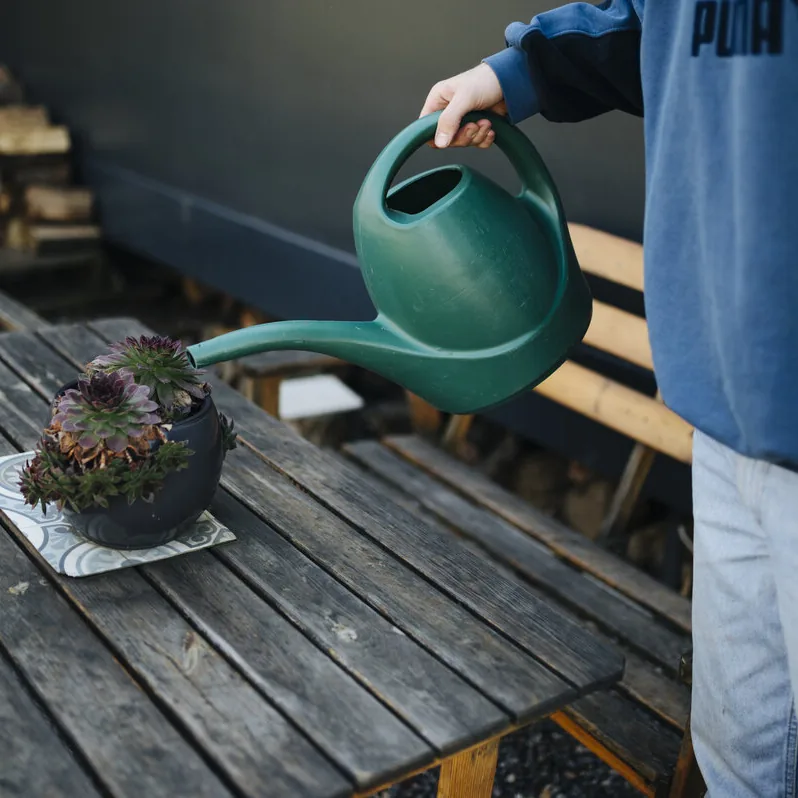
Cover photo: Hand-watering potted plants, an illustration of pre-trip care rather than an automated system. Shixart1985 / Wikimedia Commons, CC BY 2.0. Cropped square, resized and converted to WebP.
Usamos cookies em nosso site para fornecer a melhor experiência de uso, lembrando suas preferências e visitas repetidas. Ao clicar em “Aceitar”, concorda com a utilização de TODOS os cookies.
Este site usa cookies para melhorar sua experiência enquanto você navega pelo site. Destes cookies, os cookies que são categorizados como necessários são armazenados no seu navegador, pois são essenciais para o

funcionamento das funcionalidades básicas do site. Também usamos cookies de terceiros que nos ajudam a analisar e entender como você usa este site. Esses cookies serão armazenados em seu navegador apenas com

o seu consentimento. Você também tem a opção de bloquear esses cookies. Porém, a desativação de alguns desses cookies pode afetar sua experiência de navegação.
Os cookies necessários são absolutamente essenciais para o funcionamento adequado do site. Esta categoria inclui apenas cookies que garantem funcionalidades básicas e recursos de segurança do site. Esses cookies não armazenam nenhuma informação pessoal.
Quaisquer cookies que possam não ser particularmente necessários para o funcionamento do site e sejam usados especificamente para coletar dados pessoais do usuário por meio de análises, anúncios e outros conteúdos incorporados são denominados cookies não necessários. É obrigatório obter o consentimento do usuário antes de executar esses cookies no seu site.