Is your Cymbidium growing, filling its pot with leaves and still not flowering? Before switching fertilizers, check the light and nighttime temperatures. For many hybrids, those factors can tell you more than a fertilizer formula.
At a glance
Genus: Cymbidium.
Family: Orchidaceae.
Scope: Species and hybrids with different needs.
Size: Varies from compact plants to larger clumps.
Pseudobulbs: Swollen sections of stem at the base of the leaves. They store reserves and grow in clusters.
Leaves: Usually long.
Flowers: Color, size and the arrangement of flower spikes vary by species and hybrid.
Light: Bright, with protection from strong sun and excessive heat.
Temperature: Many traditional hybrids need cool nights; some lines are more heat-tolerant.
Watering: Adjust to growth and drying, avoiding both waterlogging and repeated dehydration.
Potting mix: Airy and freely draining, but retains some moisture.
Flowering: Timing depends on the hybrid, climate and care.
Is Cymbidium a species or a group of orchids?
Cymbidium is a genus. Shops often sell large-flowered hybrids as well as compact plants and types with trailing flower spikes. The leaves are usually long, and the pseudobulbs form a clump that expands as new shoots emerge.
Keep the label and ask the grower whether the hybrid suits your area. Some lines tolerate heat better and are less dependent on cool nights to flower. Treating every Cymbidium as a cool-climate plant can lead to the wrong choice.
Do Cymbidium orchids prefer sun or shade?
The most common hybrids need plenty of light, but strong sun and excessive heat can damage the leaves. A bright, well-ventilated spot with protection during the hottest hours is a good starting point. Adjust light to your climate and to the plant.
If the pot was in shade, increase the light gradually. Do not move it straight into strong sun. Look at the whole plant: burned leaves point to unsuitable exposure, while a vigorous plant that goes years without flowers calls for a closer look at both light and temperature.
Can Cymbidium grow in soil?
The genus includes plants that grow in soil, on other plants for support (epiphytes) and on rocks (lithophytes). The name Cymbidium alone does not tell you to use garden soil. In a pot, the goal is to keep water available without depriving the roots of air. If you are starting out, a commercial mix recommended for Cymbidium is a more predictable choice than heavy soil from the yard.
Do not assume “mini” means heat-tolerant. Compact groups have different origins. Ask for the name of the hybrid and whether it has bloomed in your area, not just how big the flowers are.
What pot and potting mix should you use?
Use a container with drainage holes and an orchid mix that retains some moisture without restricting airflow. Bark-based mixes are a common option. The mix needs to work in your conditions rather than simply match another grower’s recipe.
Pots much larger than the clump can hold water too long. When repotting, leave room for new shoots and secure the plant. Replace the mix when it has broken down, become compacted or no longer suits the roots.
How to water without waterlogging
No set number of waterings per week works for every pot. The plant usually uses more water while growing shoots and roots. In cool periods or when growth is slow, the mix takes longer to dry.
Check the mix and the weight of the pot before watering. Wet evenly and let the excess drain. Avoid both keeping the roots soggy and letting the clump dry out repeatedly. Do not let water collect in a decorative outer pot.
If the pot stays wet for many days, check drainage, container size and the condition of the mix. Watering less may not solve the problem if the mix is old and compacted.
Fertilizer: using more doesn’t mean more flowers
Choose an orchid fertilizer and follow the dilution instructions on the label. Adjust how often you apply it to the growth stage and the condition of the roots. Fertilizer does not replace suitable light, water and temperatures.
A buildup of salts in the mix can harm roots. Water with plain water between applications and allow it to drain well. If the roots show signs of trouble, find out why before fertilizing more.
Why isn’t my Cymbidium flowering?
Start with four questions: Is there enough light? Does the hybrid suit the local climate? Is the clump mature and well established? Are the roots healthy?
A plant can produce vigorous leaves without getting the conditions it needs to form flower spikes. Check whether your particular plant needs cool nights, as explained below.
Do not use ice or expose the plant to frost to try to induce flowering. Do not add more fertilizer to make up for low light. An adjustment should improve growing conditions, not add another source of stress.
How much cold does it need to flower?
For large-flowered species, the American Orchid Society’s genus description mentions several weeks of nights below about 12 °C toward the end of growth as a flowering trigger. This is not a target for every Cymbidium: heat-tolerant hybrids and lowland species may have different requirements. Identify your plant before aiming for a particular temperature.
Flowering depends on conditions over several weeks. Chilling the pot briefly does not recreate a favorable season, and cold tolerance does not make frost desirable.
How to investigate a lack of flowers, step by step
Keep a two-week record of where the pot sits, hours of light, minimum and maximum temperatures near the plant, watering and shoot condition. The aim is to understand the growing conditions, not to guarantee blooms. Compare the record with the grower’s guidance for that hybrid.
Distinguish among three situations: no spikes form, spikes form but buds do not open, or the whole plant has lost vigor. Photograph each stage. Changing the light, fertilizer, pot and watering at the same time makes it hard to tell what helped. Start with the problem your notes actually show.
When reading a temperature range, check whether it refers to night, daytime or the period when flowering is initiated. One night’s low does not describe weeks of growing conditions. And a plant bought in bloom shows what happened in its previous environment, not that it will bloom again in any corner of your home.
What should you do after flowering?
Once all the flowers on a spike have faded, remove the dry flower spike with a clean tool. Do not confuse it with live pseudobulbs or shoots. The plant still needs healthy leaves and roots for its next cycle.
If you need to repot or divide it, the period after flowering, near the start of new growth, is often suitable. Avoid breaking a clump into small pieces: weak divisions take longer to recover and bloom again.
How to divide without weakening the clump
You do not have to divide the plant every time you replace the mix. Before cutting, identify its growing points, where new shoots appear around the clump, and the links between pseudobulbs. For a division with enough reserves, keep at least three healthy pseudobulbs, preferably four or more, with foliage and active growth. Do not split off every shoot as though it were already an independent plant.
Sterilize your tool between plants, remove only dead or damaged parts and position the roots without crushing them. Leave room in the direction the shoots are growing. If the plant is loose, use a stake to keep it steady and avoid disturbing the new roots.
An old but living pseudobulb may produce a new plant, but this is a recovery and propagation project, not a plant ready to bloom. If you want flowers sooner, favor strong divisions rather than breaking up the whole clump.
Spots and rot: when to isolate the pot
Dark rot that spreads quickly through a pseudobulb, deteriorating roots and collapsing leaf bases require a different response from an old leaf turning yellow. Separate the affected plant, avoid sharing drainage water and identify the problem before choosing a product.
Moisture on petals in cool conditions can encourage flower spots. Avoid wetting the flowers and remove spent blooms. Leaf spots or patterns alone do not confirm a virus. Do not discard or treat a plant based only on resemblance to an online photograph.
Frequently asked questions
Can I grow it indoors?
It can work in a genuinely bright environment with temperatures that suit the plant. A dark spot chosen only for décor is unlikely to meet the needs of common hybrids.
Does it need a clear pot?
No. A clear pot can make moisture easier to check, but the genus does not require one. Drainage, potting mix and the right pot size matter more.
Do yellow leaves mean it needs fertilizer?
Not necessarily. Too much light, root problems and natural aging can also change leaf color. Check whether an old leaf or several shoots are affected, and look at the pot’s conditions before acting.
When will it flower again?
Timing varies with the hybrid, climate and care. Note when your plant produces shoots and flower spikes. This is more useful than copying a calendar from another country or hemisphere.
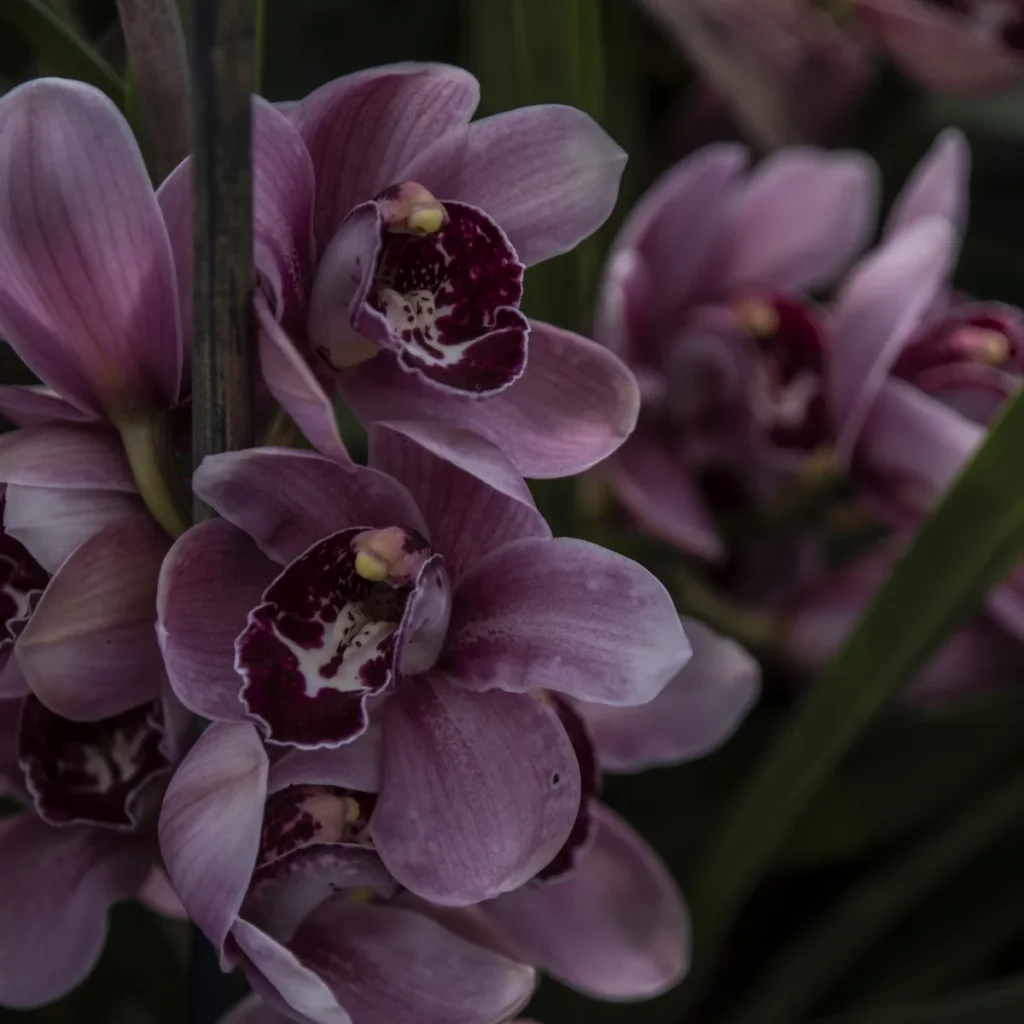
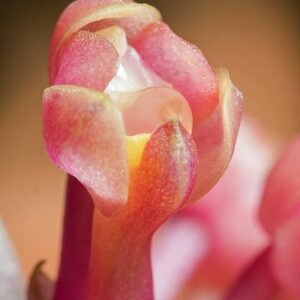
Cymbidium flowers. Photo: Circe Denyer / Public Domain Pictures, public domain (CC0). Cropped to a square and converted to WebP. The framing was retained when resizing to 1200 × 1200 pixels and compressing, without upscaling.
Usamos cookies em nosso site para fornecer a melhor experiência de uso, lembrando suas preferências e visitas repetidas. Ao clicar em “Aceitar”, concorda com a utilização de TODOS os cookies.
Este site usa cookies para melhorar sua experiência enquanto você navega pelo site. Destes cookies, os cookies que são categorizados como necessários são armazenados no seu navegador, pois são essenciais para o

funcionamento das funcionalidades básicas do site. Também usamos cookies de terceiros que nos ajudam a analisar e entender como você usa este site. Esses cookies serão armazenados em seu navegador apenas com

o seu consentimento. Você também tem a opção de bloquear esses cookies. Porém, a desativação de alguns desses cookies pode afetar sua experiência de navegação.
Os cookies necessários são absolutamente essenciais para o funcionamento adequado do site. Esta categoria inclui apenas cookies que garantem funcionalidades básicas e recursos de segurança do site. Esses cookies não armazenam nenhuma informação pessoal.
Quaisquer cookies que possam não ser particularmente necessários para o funcionamento do site e sejam usados especificamente para coletar dados pessoais do usuário por meio de análises, anúncios e outros conteúdos incorporados são denominados cookies não necessários. É obrigatório obter o consentimento do usuário antes de executar esses cookies no seu site.