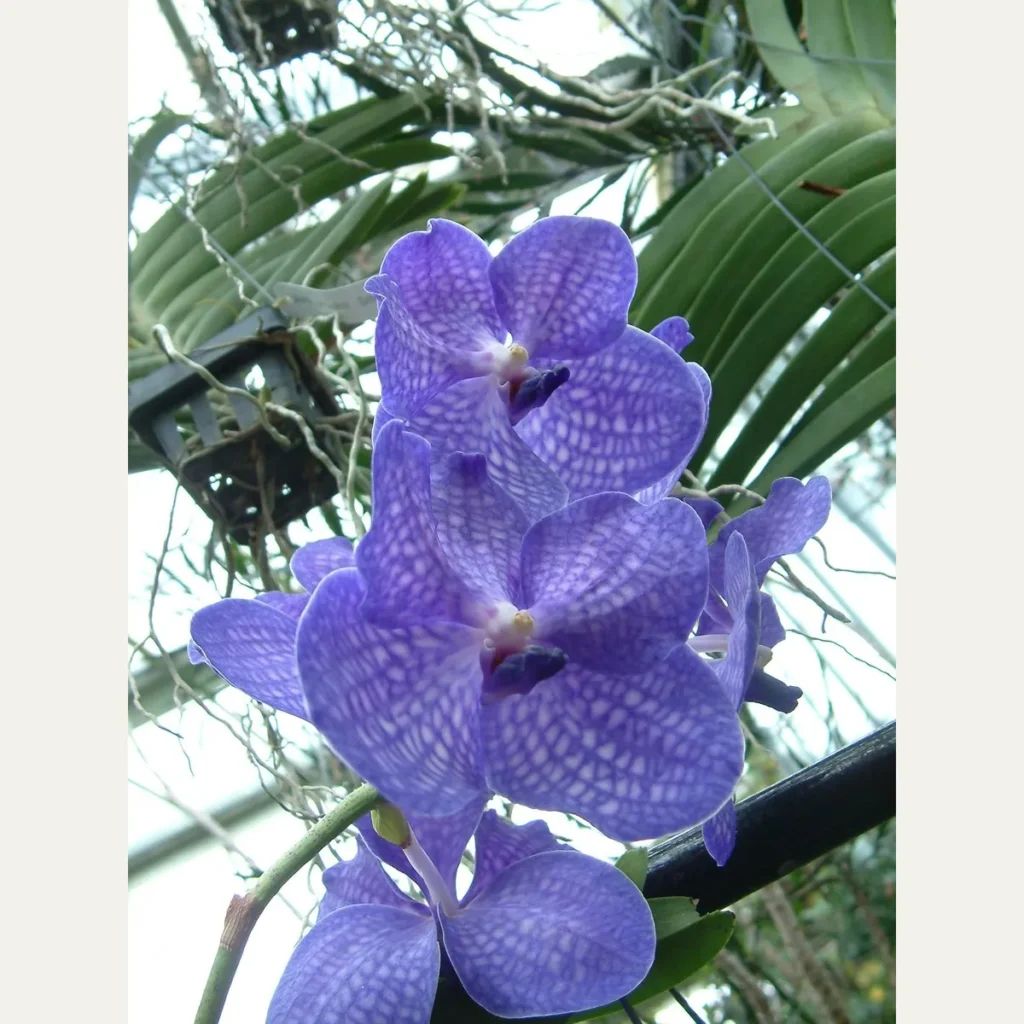
The dangling roots of a Vanda orchid draw almost as much attention as its flowers. They are not simply spilling out of the pot: they are part of how the plant grows. The key to growing it well is to provide plenty of light and water while keeping air moving around the roots.
At a glance
Genus: Vanda.
Family: Orchidaceae.
Origin: Asia; many ornamental hybrids are also available.
Growth habit: Monopodial, growing from one main point on the stem.
Leaves: Arranged in two rows.
Roots: Aerial roots grow along the stem and need water and airflow.
Pseudobulbs: Vanda lacks the swollen stems that store reserves in many other orchids.
Flowers and size: Vary by species and hybrid.
Light: Usually bright, with gradual acclimation.
Temperature: Depends on the species or the species from which a hybrid was bred.
Watering: Wet the roots thoroughly and adjust to how quickly they actually dry. Do not let water sit around them.
Growing setup: Open baskets, exposed roots or a coarse, free-draining potting mix.
Know your Vanda before choosing a spot
The stem grows from one main point and lacks the swollen storage structures called pseudobulbs. Some plants produce side shoots called keikis. Species and hybrids sold as Vanda vary in size and growth rate, so keep the full plant label.
Vanda coerulea, for example, prefers cooler conditions than many tropical vandas. Do not assume that a temperature one plant tolerates will suit your whole collection.
Do Vanda orchids prefer sun or shade?
They need plenty of light, but the right intensity depends on the plant’s identity. Among vandas and their relatives, types with cylindrical leaves tolerate stronger light than many broad-leaved types. That does not mean a newly purchased plant can go straight into strong sun.
Acclimate it gradually and protect it from excessive heat. In Brazil, observe how sunlight reaches your growing area throughout the day and across the seasons. Do not automatically follow a foreign guide’s advice to use a south-facing window.
Should you grow Vanda with or without potting mix?
Exposed roots: Open baskets improve airflow, but the roots dry quickly and need a watering routine that keeps up.
In a pot: Medium or coarse orchid bark can help manage moisture, provided water drains freely from the container. Do not pack dense soil around the roots. Choose a method that suits your climate and the time you have for plant care.
How to water exposed roots and potted plants
Wet the roots thoroughly in the morning and let the excess water drain. Many Vanda roots turn from pale to green when hydrated. On hot days, hanging plants may need daily attention. For potted plants, check the moisture in the potting mix as well.
After adding potting mix, do not keep the same watering schedule you used for an open basket. Wind, heat and humidity all affect drying time. Air conditioning can dry the air, while high humidity without airflow can also cause problems. Watch the plant, not just the calendar.
Wrinkled or dark roots: what to look for
Wilted leaves do not prove that the plant needs more water. Rotten roots also lose the ability to take up water. Before watering more, look for firm roots or brown, soft patches. Color alone is not enough to decide whether to cut a root.
A light misting is no substitute for wetting the whole root system. For exposed roots, watering a second time a few minutes later can help them hydrate fully. Avoid dipping several plants in the same bucket: shared water can spread disease. Do not leave the plant submerged permanently.
When should you change the basket or repot?
Dangling roots are normal and are not a reason to cut them. If the basket has become too small, consider placing it inside a larger one so the attached roots stay intact. For potted plants, replace deteriorating potting mix and avoid switching between growing setups repeatedly.
How to fertilize without making the solution too strong
Use an orchid fertilizer as directed on the label. Do not increase the concentration to force flowering. Watering with plain water helps flush out accumulated residue. Fertilize less when plant growth slows.
Why isn’t my Vanda blooming?
Look at light, watering, temperature and humidity together. A spot that seems bright may provide too little light for much of the day. Note where the plant is, how long it takes to dry and whether it is producing roots and leaves. Change one factor at a time.
There is no guaranteed number of blooms per year. A young plant or one recovering from stress needs to establish itself first. After flowering, remove the flower spike only once it is dry, taking care not to damage the stem.
Frequently asked questions
Can I cut the roots to fit the décor?
Keep healthy roots intact. Change the support or find a spot with enough room instead.
Can I keep a Vanda indoors?
Only if the spot has enough light, airflow and space. A dark corner of the living room cannot substitute for suitable growing conditions.
How do I propagate it?
Keikis need roots of their own before they can be separated. Do not cut the stem as you would prune an ordinary shrub.
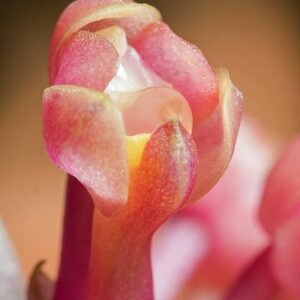
Cover photo: Vanda coerulea. Photo: Alex Lomas / Wikimedia Commons, CC BY 2.0. Fitted to a square with neutral margins, without cropping, and converted to WebP. Growing needs vary among species and hybrids.
Usamos cookies em nosso site para fornecer a melhor experiência de uso, lembrando suas preferências e visitas repetidas. Ao clicar em “Aceitar”, concorda com a utilização de TODOS os cookies.
Este site usa cookies para melhorar sua experiência enquanto você navega pelo site. Destes cookies, os cookies que são categorizados como necessários são armazenados no seu navegador, pois são essenciais para o

funcionamento das funcionalidades básicas do site. Também usamos cookies de terceiros que nos ajudam a analisar e entender como você usa este site. Esses cookies serão armazenados em seu navegador apenas com

o seu consentimento. Você também tem a opção de bloquear esses cookies. Porém, a desativação de alguns desses cookies pode afetar sua experiência de navegação.
Os cookies necessários são absolutamente essenciais para o funcionamento adequado do site. Esta categoria inclui apenas cookies que garantem funcionalidades básicas e recursos de segurança do site. Esses cookies não armazenam nenhuma informação pessoal.
Quaisquer cookies que possam não ser particularmente necessários para o funcionamento do site e sejam usados especificamente para coletar dados pessoais do usuário por meio de análises, anúncios e outros conteúdos incorporados são denominados cookies não necessários. É obrigatório obter o consentimento do usuário antes de executar esses cookies no seu site.