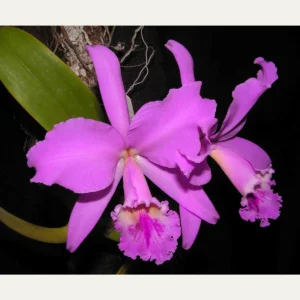
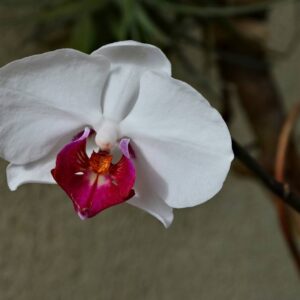
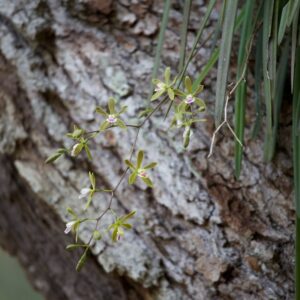
A flowering Phalaenopsis can brighten a room for weeks, sometimes months. Keeping it healthy afterwards is less about secret tricks than understanding its roots, light and watering needs.
Often called a moth orchid, Phalaenopsis is a genus, not a single species. Most plants sold for the home are hybrids, frequently without a cultivar name. This guide focuses on those common houseplant hybrids; specialist species may need different care.
Start with a bright, sheltered position
A well-lit spot near a window is usually better than a dark coffee table. Filter harsh direct sunlight and keep the plant away from heaters and cold draughts. Kew recommends warmth and a minimum around 15°C for moth orchids; avoid treating a cold-tolerance limit as a comfortable growing temperature.
If a healthy orchid produces leaves but no flowers, review the light before buying more fertiliser. Changes in day and night temperature can influence flower-spike formation, but sudden extremes may cause buds to drop. There is no need to expose the plant to damaging cold to make it bloom.
The pot is a home for roots, not a decoration alone
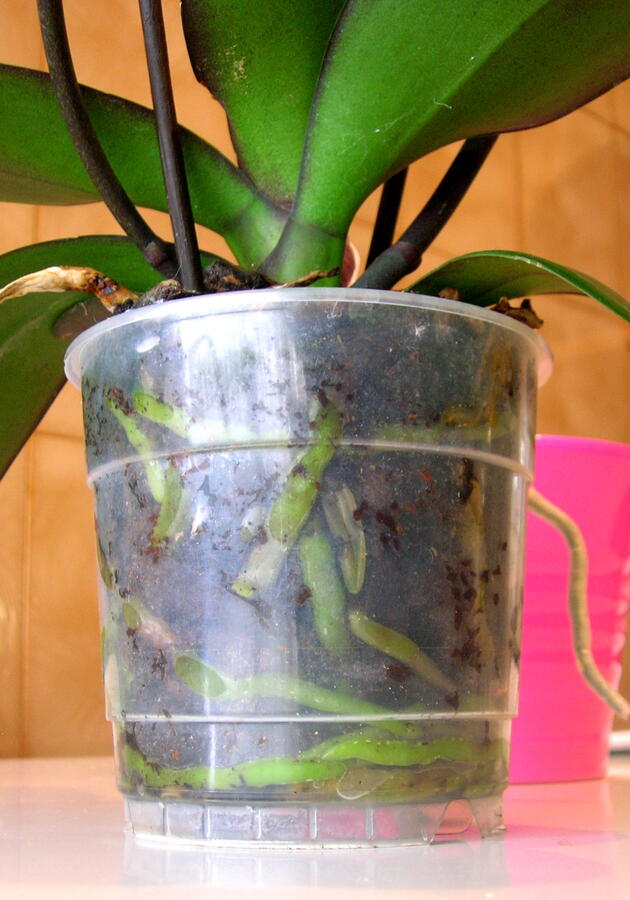
Many Phalaenopsis grow naturally on trees, with air around their roots. In a pot, an airy orchid mix, often based on bark, recreates that drainage better than compact garden soil. A clear pot is useful for observation; ceramic is not automatically superior. Whichever container you choose must let surplus water escape.
Roots growing outside the pot are normal. Do not cut healthy aerial roots just to make the plant look tidier. During repotting, distinguish firm living roots from soft, decaying tissue, and handle them gently.
A clear pot helps you observe roots; the photograph is not a prescription for a particular potting mix. Javier Mediavilla Ezquibela, Wikimedia Commons, CC BY 2.5. Resized and compressed.
Water by checking the mix
Water thoroughly, then allow drainage. Wait until the mix is approaching dryness before watering again, without leaving the plant completely dry for a prolonged period. The American Orchid Society stresses that timing changes with conditions: a hot, dry room and a cool greenhouse do not follow the same schedule.
Bark and moss also hold water differently. Feel the mix below the surface and learn the weight of the pot. Empty the decorative outer container after watering, and avoid leaving water pooled in the crown where the leaves meet. Morning watering gives accidental splashes time to dry.
Humidity and feeding without excess
Air movement matters alongside humidity. Repeated misting is not a substitute for watering the roots, and a constantly wet plant in stagnant air is not the goal. Maryland Extension notes that misting alone usually provides insufficient moisture in normal indoor conditions.
Feed lightly with a suitable orchid fertiliser during active growth, following its label. More fertiliser does not guarantee more flowers. Periodic watering without feed helps wash accumulated salts from the potting mix.
After the flowers fade
A finished display does not mean the orchid is dying. Keep caring for its leaves and roots. A green flower spike may branch again; a completely dry brown spike can be removed with a clean tool. For a tired plant, prioritise recovery rather than forcing another immediate display.
Repot when the mix breaks down and stops draining well, or when the root system genuinely needs more space. Do not choose a huge pot just because some aerial roots have escaped. Sometimes a small plantlet, called a keiki, appears on a spike; that is not guaranteed and is not a reason to cut an ordinary flower stem into pieces.
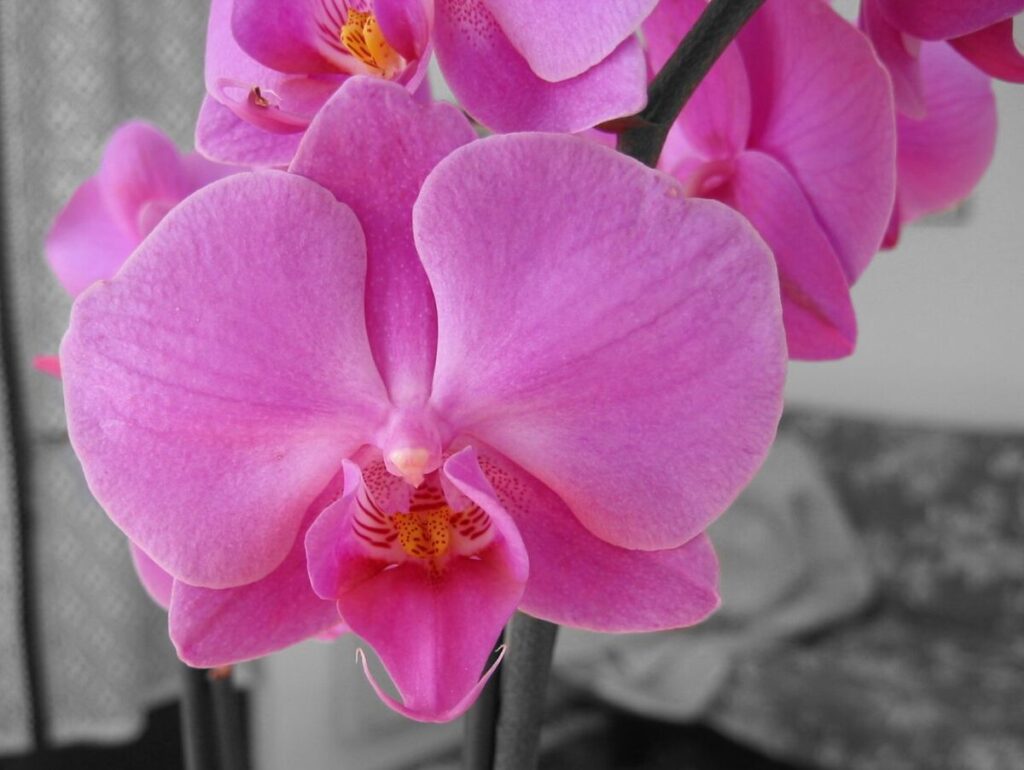
Cover: Phalaenopsis hybrid, cultivar unspecified. Rollopack, Wikimedia Commons, CC BY-SA 3.0. Resized and compressed; adapted image under the same license.
Usamos cookies em nosso site para fornecer a melhor experiência de uso, lembrando suas preferências e visitas repetidas. Ao clicar em “Aceitar”, concorda com a utilização de TODOS os cookies.
Este site usa cookies para melhorar sua experiência enquanto você navega pelo site. Destes cookies, os cookies que são categorizados como necessários são armazenados no seu navegador, pois são essenciais para o

funcionamento das funcionalidades básicas do site. Também usamos cookies de terceiros que nos ajudam a analisar e entender como você usa este site. Esses cookies serão armazenados em seu navegador apenas com

o seu consentimento. Você também tem a opção de bloquear esses cookies. Porém, a desativação de alguns desses cookies pode afetar sua experiência de navegação.
Os cookies necessários são absolutamente essenciais para o funcionamento adequado do site. Esta categoria inclui apenas cookies que garantem funcionalidades básicas e recursos de segurança do site. Esses cookies não armazenam nenhuma informação pessoal.
Quaisquer cookies que possam não ser particularmente necessários para o funcionamento do site e sejam usados especificamente para coletar dados pessoais do usuário por meio de análises, anúncios e outros conteúdos incorporados são denominados cookies não necessários. É obrigatório obter o consentimento do usuário antes de executar esses cookies no seu site.