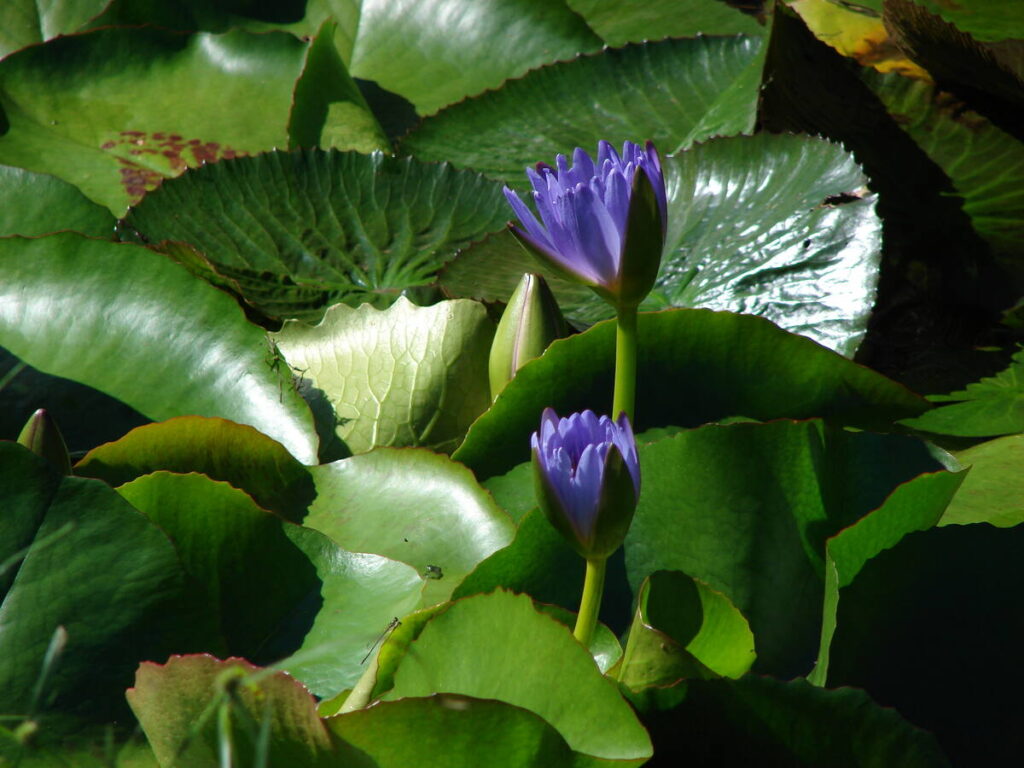
A waterlily can become the focal point of a pond without rising far above the water. Rounded leaves spread across the surface, framing flowers that may be white, pink, yellow or other colours. Choosing a suitable plant matters more than choosing the brightest bloom.
This guide covers Nymphaea, the genus of waterlilies, rather than one species. There are many species and garden cultivars, with different sizes and temperature requirements. A label that simply says “waterlily” is not enough to determine the right planting depth.
Choose for your pond and climate
Start with the available surface area, water depth and sunlight. A vigorous cultivar can overwhelm a small tub; a dwarf selection is a better starting point for limited space. Leave open water rather than trying to cover the entire surface.
Hardy and tropical waterlilies should not be treated as interchangeable. Tropical kinds need warmth and protection from cold conditions. There is no single ideal temperature or mature width for the whole genus. Ask the nursery for the cultivar name, its eventual spread and suitable water depth before buying.
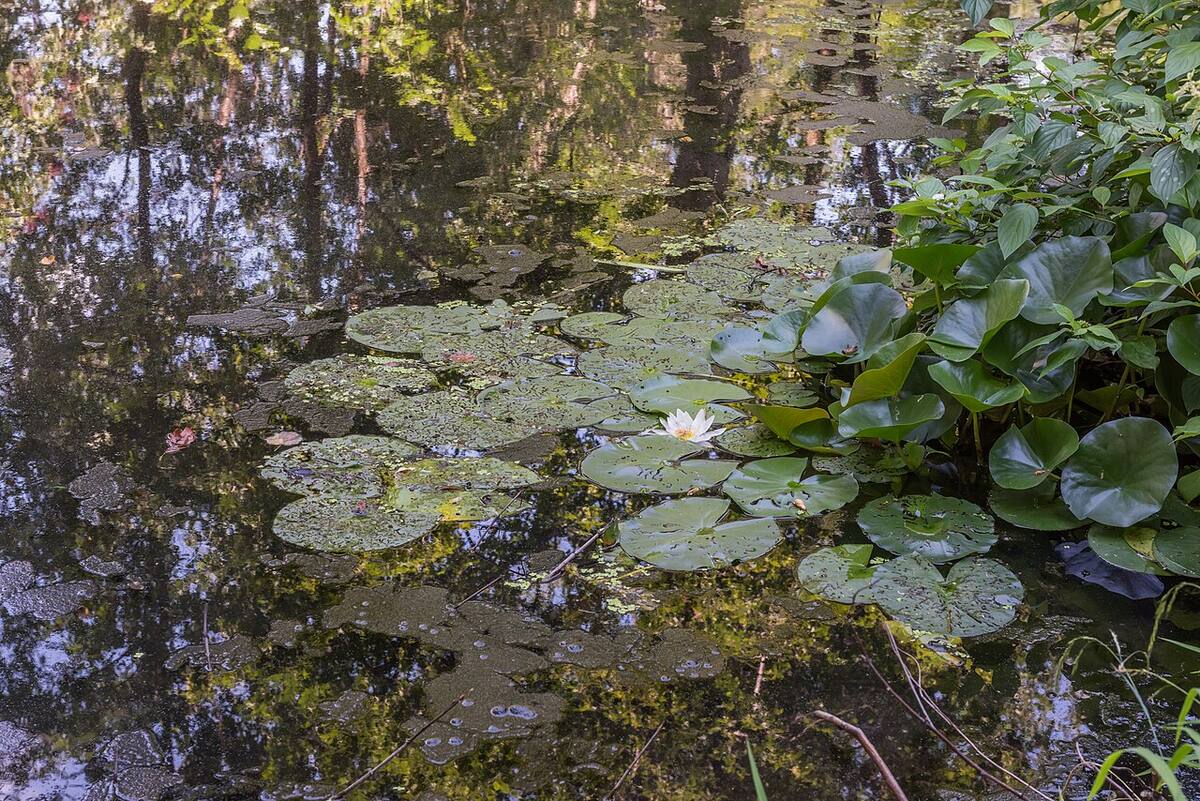
Waterlilies in the Viktring park pond, Austria. Photo: Johann Jaritz, Wikimedia Commons, CC BY-SA 4.0. Resized and compressed; adapted image under the same license.
Planting in a basket
A planting basket makes it easier to position and later lift the plant. Use growing material intended for aquatics rather than a light potting mix that floats away. A lining can help keep the soil in place; a surface layer of washed gravel helps limit disturbance.
Follow the planting instructions for the selected cultivar. Many young hardy waterlilies are started nearer the surface and lowered as they grow. That is not a universal rule for every tropical kind. Depth means the water above the plant’s growing point, not just the height of the pond wall.
Light, feeding and routine care
A sunny position generally supports flowering. Keep waterlilies away from strong splashing and turbulent outlets. If a plant fails to flower, check sunlight, crowding and whether its depth matches the label before adding more fertilizer.
When feeding is needed, use an aquatic-plant product placed in the growing medium according to its label. Do not improvise a generous monthly dose or scatter ordinary fertilizer into the pond. Excess nutrients can encourage algae and affect the balance of the water garden.
Remove fading flowers and damaged leaves when they can be reached safely. Established clumps may need dividing when crowded. Division is a practical propagation method for many garden waterlilies; seed-grown offspring do not necessarily reproduce a named cultivar exactly.
A maintained pond, not an abandoned container
Water gardens need mosquito prevention. Inspect them regularly, remove excess vegetation and decomposing debris, and keep any circulation equipment working without directing a strong jet onto the lilies. For permanent ponds, seek local vector-control advice if larvae appear. Do not introduce fish or apply chemicals indiscriminately.
CDC recommends weekly emptying and scrubbing of unnecessary water-holding containers around the home. That advice is not a reason to empty an established planted pond every week: permanent water features need their own maintenance plan. Do not assume that a flower or a few fish make a pond mosquito-proof.
Keep aquatic plants within managed ponds or containers, and never release surplus plants into natural waterways. Treat these as ornamental plants, not as ingredients identified from photographs.
Usamos cookies em nosso site para fornecer a melhor experiência de uso, lembrando suas preferências e visitas repetidas. Ao clicar em “Aceitar”, concorda com a utilização de TODOS os cookies.
Este site usa cookies para melhorar sua experiência enquanto você navega pelo site. Destes cookies, os cookies que são categorizados como necessários são armazenados no seu navegador, pois são essenciais para o

funcionamento das funcionalidades básicas do site. Também usamos cookies de terceiros que nos ajudam a analisar e entender como você usa este site. Esses cookies serão armazenados em seu navegador apenas com

o seu consentimento. Você também tem a opção de bloquear esses cookies. Porém, a desativação de alguns desses cookies pode afetar sua experiência de navegação.
Os cookies necessários são absolutamente essenciais para o funcionamento adequado do site. Esta categoria inclui apenas cookies que garantem funcionalidades básicas e recursos de segurança do site. Esses cookies não armazenam nenhuma informação pessoal.
Quaisquer cookies que possam não ser particularmente necessários para o funcionamento do site e sejam usados especificamente para coletar dados pessoais do usuário por meio de análises, anúncios e outros conteúdos incorporados são denominados cookies não necessários. É obrigatório obter o consentimento do usuário antes de executar esses cookies no seu site.