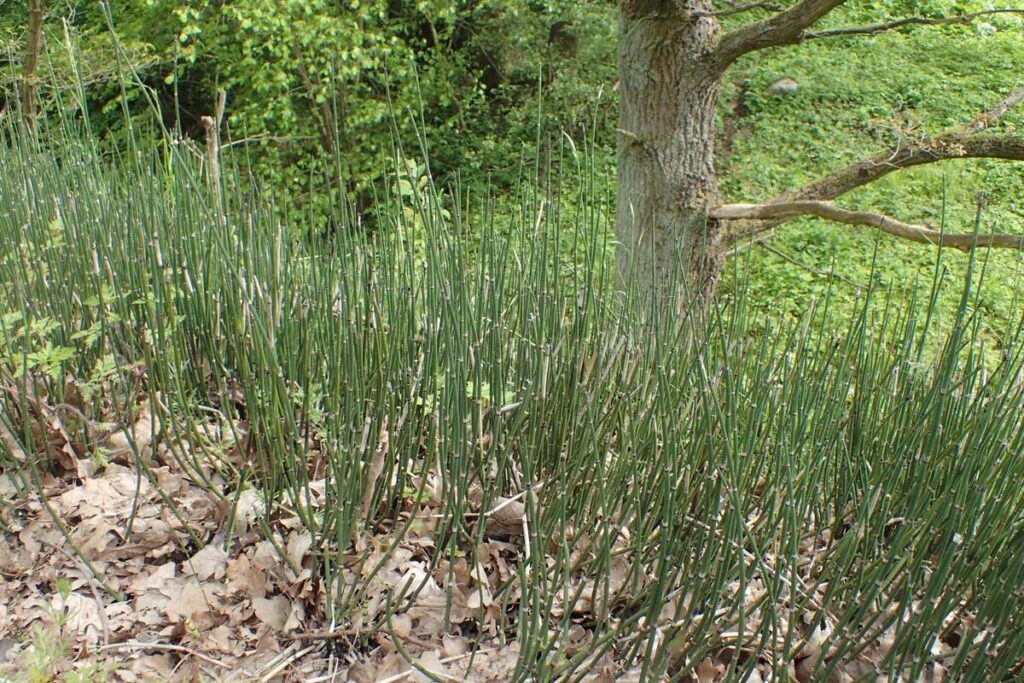
Rough horsetail (Equisetum hyemale), also called scouring rush, brings a striking pattern of upright green stems and dark bands to a damp garden. It resembles miniature bamboo at first glance, but it is neither a bamboo nor a flowering plant.
Its appeal comes with an important decision: where will the plant be allowed to spread? Plan containment before planting, and keep it away from places where livestock can graze.
Stems, not bamboo canes
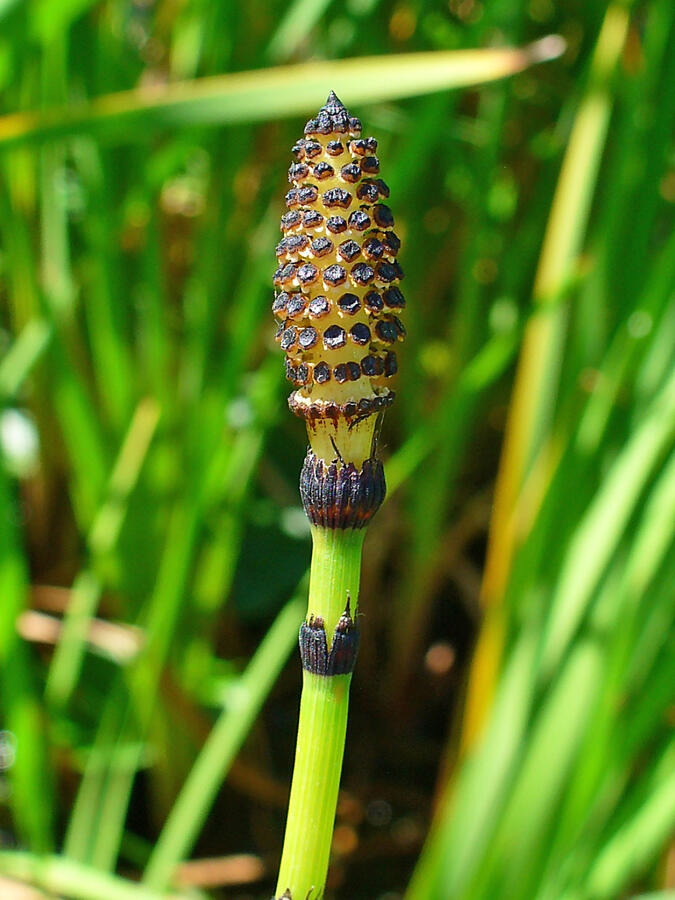
This perennial has hollow, jointed stems. Its small leaves form sheaths around the joints rather than a leafy canopy. The cone-like structures at the stem tips are reproductive structures called strobili, not flowers. They produce spores instead of seeds.
The plant also expands through underground stems called rhizomes. A neat-looking clump above ground can therefore occupy more space below the surface than it appears to.
The strobilus produces spores; it is not a flower. Photo: H. Zell, Wikimedia Commons, CC BY-SA 3.0. Resized and compressed; adapted image under the same license.
A plant for moist ground
Choose consistently moist ground, a managed bog garden or a suitable container. Full sun and partial shade are both possible. This is not a plant to treat like a drought-loving succulent: a small container can dry quickly, even when its stems still look firm.
A damp bed can provide the right conditions without creating an unmanaged container of standing water. Check moisture regularly and adapt watering to the weather and container size. For pond-edge planting, plan the whole aquatic system and its maintenance rather than simply abandoning a water-filled pot.
Containment matters more than multiplication
Horsetail can spread beyond its intended space. A container or underground barrier may help, but neither is a promise of permanent control: check for escaping rhizomes and new shoots. Avoid planting it beside natural waterways or where escaped material would be difficult to retrieve.
Division is a practical way to obtain new plants, but only do this when you have a suitable, contained destination. Do not discard rhizomes or plant fragments in drains, streams or unmanaged wet ground. Unwanted growth is easier to address early than after a dense colony becomes established.
Is rough horsetail safe to consume?
Do not regard this ornamental plant as harmless or use it for homemade teas and remedies. The University of Tennessee’s McClung Museum states that large amounts of E. hyemale can be toxic when eaten by people or grazing animals. That warning does not establish a safe household dose.
NC State documents horsetail poisoning in horses, including exposure through hay. Keep plants and discarded cuttings away from animals, and do not offer them as feed. Evidence about horses cannot be used to declare the plant safe for dogs or cats. Seek medical or veterinary advice following ingestion.
Several species share the name horsetail. Information about one medicinal species should not be transferred automatically to another. This guide concerns Equisetum hyemale; the photographs show plants identified under that name, not a recipe for identifying edible material.
Usamos cookies em nosso site para fornecer a melhor experiência de uso, lembrando suas preferências e visitas repetidas. Ao clicar em “Aceitar”, concorda com a utilização de TODOS os cookies.
Este site usa cookies para melhorar sua experiência enquanto você navega pelo site. Destes cookies, os cookies que são categorizados como necessários são armazenados no seu navegador, pois são essenciais para o

funcionamento das funcionalidades básicas do site. Também usamos cookies de terceiros que nos ajudam a analisar e entender como você usa este site. Esses cookies serão armazenados em seu navegador apenas com

o seu consentimento. Você também tem a opção de bloquear esses cookies. Porém, a desativação de alguns desses cookies pode afetar sua experiência de navegação.
Os cookies necessários são absolutamente essenciais para o funcionamento adequado do site. Esta categoria inclui apenas cookies que garantem funcionalidades básicas e recursos de segurança do site. Esses cookies não armazenam nenhuma informação pessoal.
Quaisquer cookies que possam não ser particularmente necessários para o funcionamento do site e sejam usados especificamente para coletar dados pessoais do usuário por meio de análises, anúncios e outros conteúdos incorporados são denominados cookies não necessários. É obrigatório obter o consentimento do usuário antes de executar esses cookies no seu site.