A bougainvillea covered in colour can transform a sunny wall, but its success depends more on the right position than constant attention. These South American plants include different species, hybrids and cultivars. Some make large scrambling shrubs; more compact selections work well in containers. Choose for the space available rather than expecting every plant to behave alike.
The colourful parts are bracts
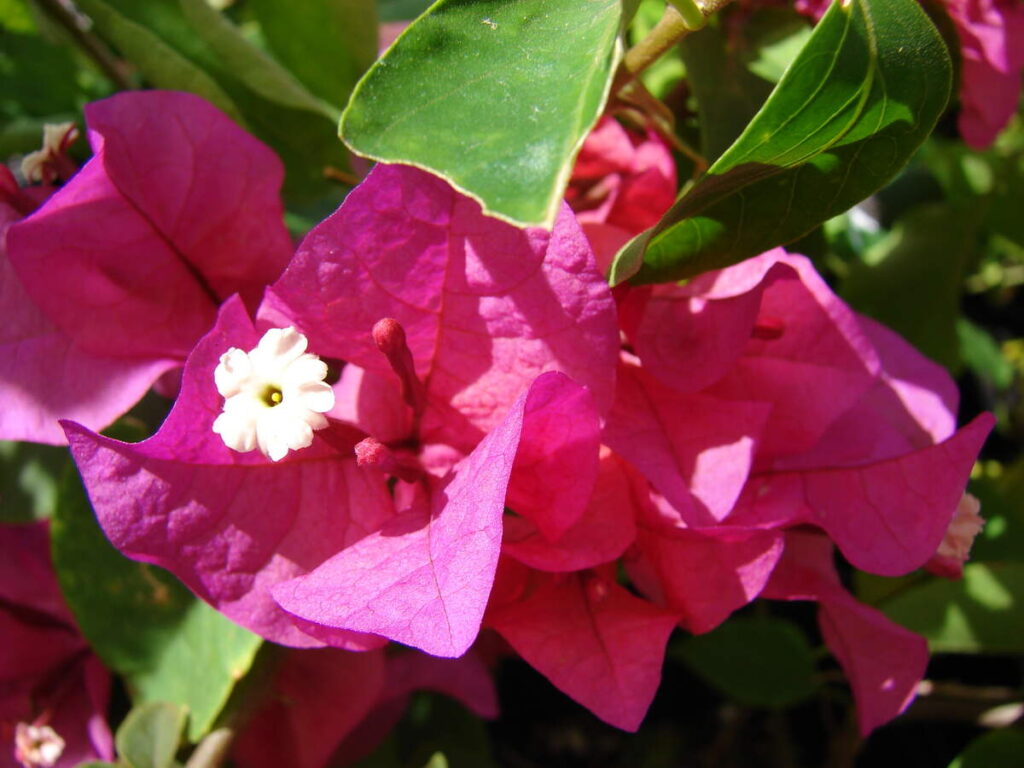
What looks like a mass of pink, purple, orange or white petals is mostly made up of bracts: modified leaves surrounding the much smaller true flowers. This distinction explains the familiar papery display. Colour alone is not enough to identify a species or cultivar.
Start with sun, drainage and space
Outdoors, choose full sun and freely draining soil. Deep shade is not a good way to obtain a strong display. Bougainvillea is sensitive to frost; in cold-winter areas, a container that can be moved to a bright, frost-free space is more practical than an exposed permanent planting.
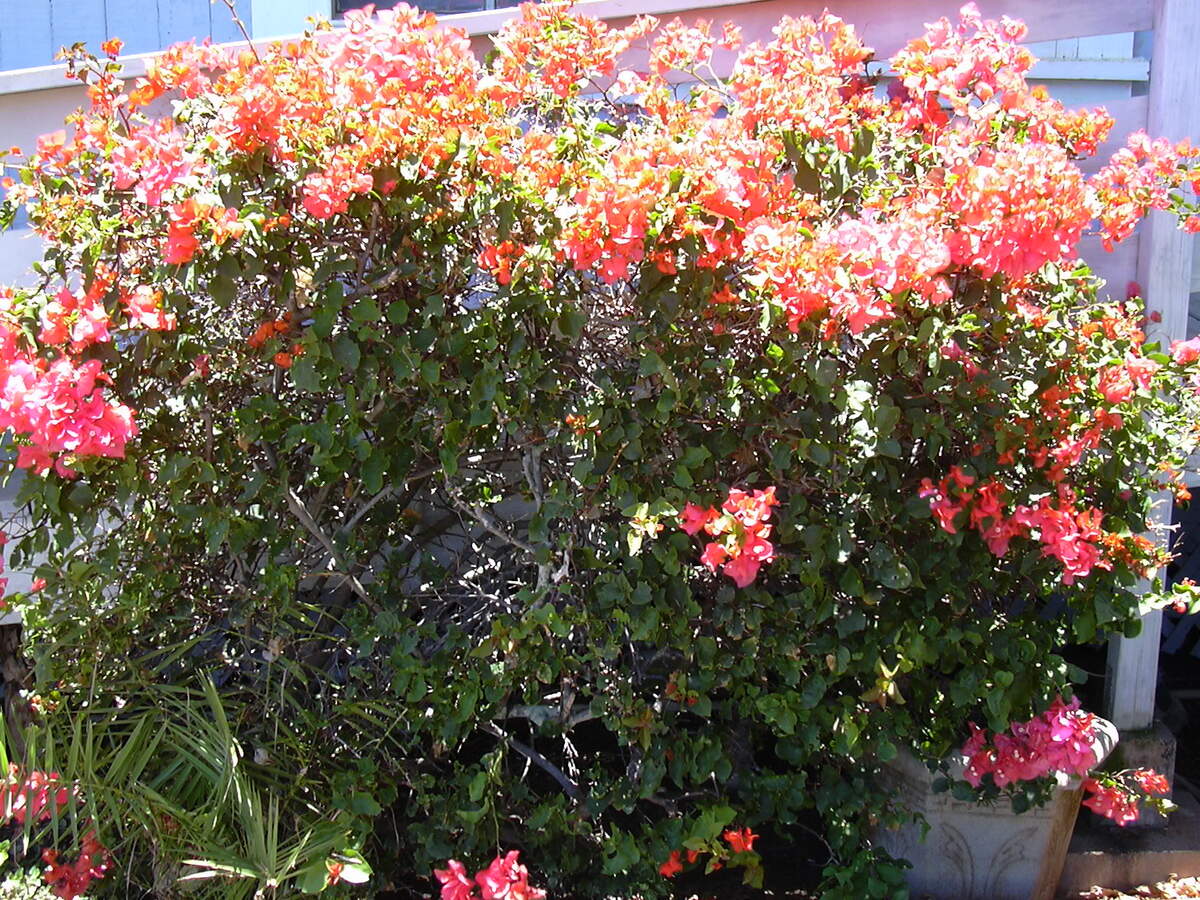
A vigorous plant needs a suitable trellis or support if it is to cover a wall. It can also be trained as a shrub or a small standard. Check the cultivar’s mature size when buying. Position thorny branches away from narrow paths, play areas and places where people brush past.
A newly planted specimen needs monitoring while its roots establish. Drought tolerance in a mature plant does not mean a cutting or fresh transplant can be left dry. Once established in suitable soil, it generally needs less frequent irrigation, but prolonged dry weather still calls for attention.
Containers are different: their limited soil volume dries differently from a garden bed. Check the substrate, water when needed and let excess water drain away. Avoid both permanently soggy soil and deliberate severe wilting as a supposed flowering trick. Requirements change with heat, pot size and growth.
Why is it leafy but not flowering?
First check sunlight, excessive irrigation, repeated trimming and fertilizer. UF/IFAS notes that too much nitrogen can favour leaves rather than blooms. Adding more fertilizer without understanding the problem can make matters worse. Follow the chosen product’s directions rather than applying the same formula every month regardless of conditions.
There is no flowering calendar that fits every climate. Advice for Florida or a heated British conservatory should not be copied month for month into a Brazilian garden. Observe the plant’s local growth and flowering cycles.
Pruning and propagation
Flowers form on new growth, so continual clipping can remove potential flowering shoots. Plan substantial pruning around the end of the main display and the local growth cycle. Remove unwanted growth to maintain access and shape without treating the plant as a hedge that must be cut constantly.
Stem cuttings are a common propagation method. The RHS describes semi-ripe cuttings, taken from growth that is becoming firm, and notes that rooting takes time. Use a well-drained propagation medium and monitor moisture; success varies with the material and conditions. A rooted nursery plant is the more predictable starting point if you need a particular cultivar.
Thorns, sap and plant health
Wear sturdy gloves and protect skin and eyes when pruning. UC ANR warns that thorn punctures can cause dermatitis and that sap is mildly toxic if swallowed in large quantities. Do not treat an unidentified ornamental bougainvillea as food. This is a precaution, not a claim that every plant part or traditional use has the same risk.
Inspect leaves and young shoots if growth deteriorates. UC IPM lists aphids, mealybugs, whiteflies and other pests, as well as damage from frost, salt and watering problems. Identify the cause before treating: a stressed plant does not automatically need an insecticide.
Usamos cookies em nosso site para fornecer a melhor experiência de uso, lembrando suas preferências e visitas repetidas. Ao clicar em “Aceitar”, concorda com a utilização de TODOS os cookies.
Este site usa cookies para melhorar sua experiência enquanto você navega pelo site. Destes cookies, os cookies que são categorizados como necessários são armazenados no seu navegador, pois são essenciais para o

funcionamento das funcionalidades básicas do site. Também usamos cookies de terceiros que nos ajudam a analisar e entender como você usa este site. Esses cookies serão armazenados em seu navegador apenas com

o seu consentimento. Você também tem a opção de bloquear esses cookies. Porém, a desativação de alguns desses cookies pode afetar sua experiência de navegação.
Os cookies necessários são absolutamente essenciais para o funcionamento adequado do site. Esta categoria inclui apenas cookies que garantem funcionalidades básicas e recursos de segurança do site. Esses cookies não armazenam nenhuma informação pessoal.
Quaisquer cookies que possam não ser particularmente necessários para o funcionamento do site e sejam usados especificamente para coletar dados pessoais do usuário por meio de análises, anúncios e outros conteúdos incorporados são denominados cookies não necessários. É obrigatório obter o consentimento do usuário antes de executar esses cookies no seu site.