Sacred lotus is striking before its flowers even open. Broad leaves stand over the water, and a distinctive seed head remains after the petals fall. To grow Nelumbo nucifera successfully, think of a small aquatic system rather than an ordinary flowerpot: light, planting depth, water management and safe maintenance all matter.
Recognising sacred lotus
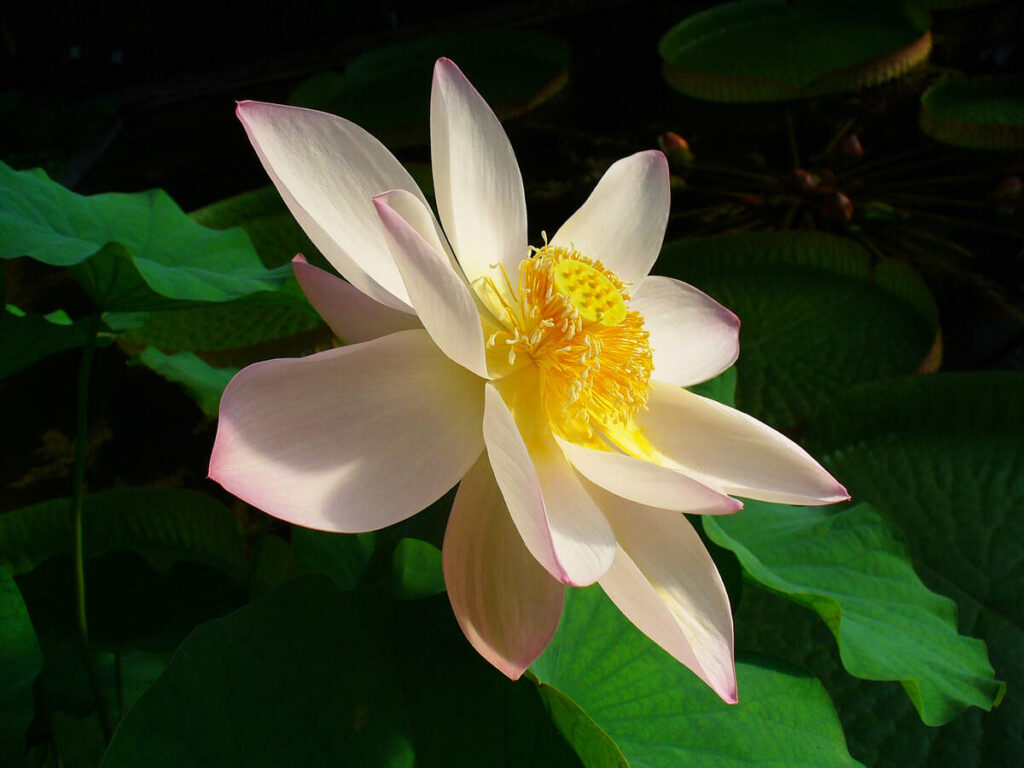
This aquatic perennial belongs to Nelumbonaceae. NParks records its native distribution in Asia and northeastern Australia. Its underground rhizome is a horizontal stem in the mud, while the leaf stalk attaches near the centre of the round leaf. Flowers and developing fruits are held above the water.
The RHS describes pink or white, fragrant flowers. Do not rely on the word “lotus” alone when buying: similar common names can cover different plants. Confirm Nelumbo nucifera on the label instead of assuming that a blue water flower is this species.
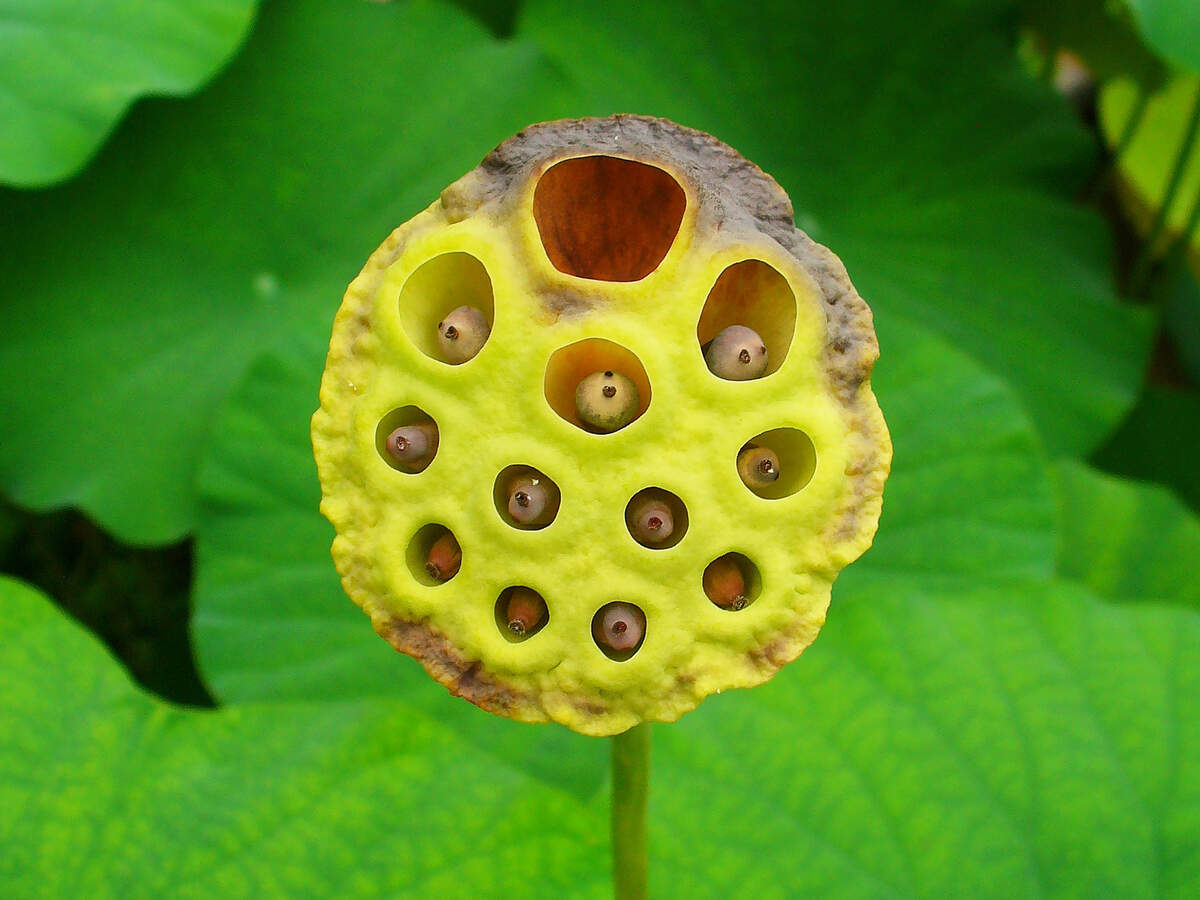
The lotus develops fruits after flowering. Photo: H. Zell, CC BY-SA 3.0; resized and compressed.
Planning the container and position
Choose a sunny position and a container suited to the cultivar. The RHS recommends heavy loam and gradually increasing water depth as growth develops; smaller cultivars need shallower conditions than large ones. Fragile rhizomes resent disturbance, so avoid treating them like robust pieces of garden root.
Before setting up a tub, consider its filled weight, access for cleaning and protection against accidental falls. A water garden is not maintenance-free just because its plant does not receive a conventional daily watering. Check the water level and condition, especially during hot weather.
NParks records the species in warm-temperate to tropical habitats. A blanket warning against growing it in warm regions would be misleading. Ask a local aquatic-plant nursery about the cultivar and your winter conditions; advice written for a cold climate should not automatically become a tropical growing rule.
Why the flower warms itself
A 1998 study by Seymour and colleagues measured flower temperatures of about 30–36°C during a two-to-four-day reproductive phase, despite much wider changes in surrounding temperature. The flowers produced heat through respiration. This is a temporary floral process, not an instruction to keep the pond at 35°C or a claim that every part of the plant stays warm.
Lotus is not the only plant with thermoregulation. Research on floral heat production also discusses species such as Symplocarpus foetidus. The mechanism is remarkable without needing to describe it as unique. The proposed benefits include conditions favourable to pollination and flower development.
Water management and mosquitoes
In Brazil, public-health guidance calls for weekly water changes and cleaning of aquatic-plant vessels. That advice is straightforward for small removable containers. A planted lotus pond is different: arrange a maintenance plan with local vector-control guidance rather than pouring soap into planted water or dismantling fragile rhizomes every week.
Inspect the setup regularly, remove unnecessary water-holding containers nearby and seek local advice if larvae appear. Do not add household chemicals or improvise pesticide doses. Standing water is a potential breeding habitat, not proof that mosquitoes are present in every pond.
Food uses do not make a garden pond a food source
Lotus has established culinary uses, including rhizomes and seeds. This does not mean an ornamental plant or an unidentified pond harvest is ready to eat. Buy food intended for consumption from a reliable supplier and follow appropriate preparation instructions.
The CDC warns that raw or undercooked contaminated freshwater plants can transmit parasites such as Fasciolopsis buski, found in southern and southeastern Asia, and recommends thorough cooking. This geographic example explains a food-safety concern; it is not evidence that this parasite occurs in every Brazilian lotus pond. Cooking also does not turn an unknown or chemically contaminated harvest into suitable food.
Usamos cookies em nosso site para fornecer a melhor experiência de uso, lembrando suas preferências e visitas repetidas. Ao clicar em “Aceitar”, concorda com a utilização de TODOS os cookies.
Este site usa cookies para melhorar sua experiência enquanto você navega pelo site. Destes cookies, os cookies que são categorizados como necessários são armazenados no seu navegador, pois são essenciais para o

funcionamento das funcionalidades básicas do site. Também usamos cookies de terceiros que nos ajudam a analisar e entender como você usa este site. Esses cookies serão armazenados em seu navegador apenas com

o seu consentimento. Você também tem a opção de bloquear esses cookies. Porém, a desativação de alguns desses cookies pode afetar sua experiência de navegação.
Os cookies necessários são absolutamente essenciais para o funcionamento adequado do site. Esta categoria inclui apenas cookies que garantem funcionalidades básicas e recursos de segurança do site. Esses cookies não armazenam nenhuma informação pessoal.
Quaisquer cookies que possam não ser particularmente necessários para o funcionamento do site e sejam usados especificamente para coletar dados pessoais do usuário por meio de análises, anúncios e outros conteúdos incorporados são denominados cookies não necessários. É obrigatório obter o consentimento do usuário antes de executar esses cookies no seu site.