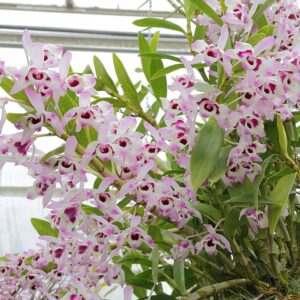
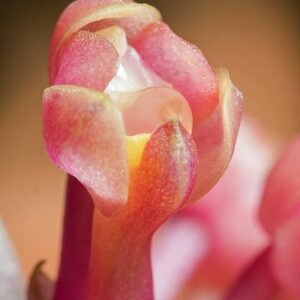
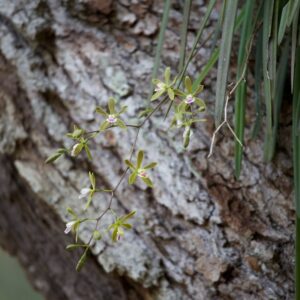
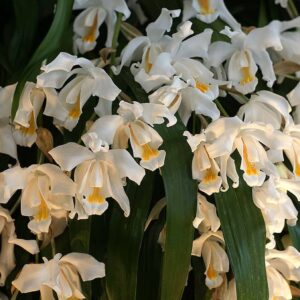
A Dendrobium covered in flowers can look like an easy purchase. The important question comes afterwards: which Dendrobium is it? This orchid genus includes plants with different seasonal rhythms. Copying a watering routine from another grower without identifying the plant can mean keeping a resting orchid too wet, or drying out one that is still growing.
Most are tree-dwelling orchids from Asia, Australia and the Pacific. Their elongated stems, often called canes, are pseudobulbs: storage organs that support leaves, roots and future flowers. A cane without leaves is not automatically dead.
Start with the name on the label
Two familiar groups help explain the differences, although they do not cover every species. Nobile-type hybrids usually benefit from a cooler, drier resting period after their canes mature. Many lose some or all of their leaves. Warm-growing, phalaenopsis-type hybrids, often sold as “den-phals”, usually keep their leaves and should not be given the same prolonged dry rest.
Den-phals are Dendrobium, not members of the separate genus Phalaenopsis. The nickname refers to the resemblance between their flowers. Keep the nursery label, and ask the supplier about the particular hybrid rather than relying only on flower colour.
Light and the place you choose
A bright position with protection from harsh midday sun is a useful starting point. Increase exposure gradually instead of moving a shaded plant straight into full sun. Warm-growing and cool-growing types need different temperature conditions; choosing a plant that suits your home is easier than trying to force the room to suit an unsuitable orchid.
Provide gentle air circulation. A closed, humid corner is not the same as a healthy growing environment. Neither a window orientation nor a season means the same thing in every country, so assess actual light and temperature where the plant stands.
Water according to growth, not the calendar
During active growth, Dendrobium generally needs reliable moisture, with the medium drying somewhat between thorough waterings. Let excess water escape. Bark, pot size, warmth and ventilation all affect drying time, so “once a week” is not a dependable rule for every plant.
For nobile-type hybrids, reduce watering as growth matures and the cooler resting period begins, while watching for excessive cane shrivelling. Follow the requirements of the identified hybrid when resuming generous watering. Do not apply that treatment indiscriminately to evergreen, warm-growing plants. Feed actively growing orchids with an appropriate orchid fertiliser, following its label and the needs of the group.
Repotting and propagation
Repot when the medium deteriorates, the plant becomes unstable or its roots need more space, ideally as new roots appear. Use an airy orchid mix and a container with drainage, rather than compact garden soil. Avoid a much larger pot simply to postpone the next repotting.
Divide only a strong, well-established plant. Keeping several healthy canes together gives each division reserves; a tiny fragment is not an instant flowering plant. Do not cut away firm, living canes merely because their leaves or flowers have fallen.
Flowers, fragrance and common misunderstandings
Flowers do not always appear at the top of the plant. In soft-cane types, they may emerge along the cane; den-phals carry sprays from upper nodes. Flowering time also varies. Identify the group before trying to diagnose a missing bloom.
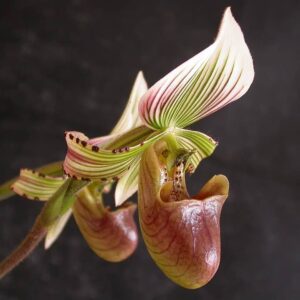
The species pictured on this page is Dendrobium anosmum. Despite its name, it can be strongly fragrant: the American Orchid Society describes a raspberry-like scent. It is a reminder that a name or a generic care table cannot replace information about the actual plant.
Usamos cookies em nosso site para fornecer a melhor experiência de uso, lembrando suas preferências e visitas repetidas. Ao clicar em “Aceitar”, concorda com a utilização de TODOS os cookies.
Este site usa cookies para melhorar sua experiência enquanto você navega pelo site. Destes cookies, os cookies que são categorizados como necessários são armazenados no seu navegador, pois são essenciais para o

funcionamento das funcionalidades básicas do site. Também usamos cookies de terceiros que nos ajudam a analisar e entender como você usa este site. Esses cookies serão armazenados em seu navegador apenas com

o seu consentimento. Você também tem a opção de bloquear esses cookies. Porém, a desativação de alguns desses cookies pode afetar sua experiência de navegação.
Os cookies necessários são absolutamente essenciais para o funcionamento adequado do site. Esta categoria inclui apenas cookies que garantem funcionalidades básicas e recursos de segurança do site. Esses cookies não armazenam nenhuma informação pessoal.
Quaisquer cookies que possam não ser particularmente necessários para o funcionamento do site e sejam usados especificamente para coletar dados pessoais do usuário por meio de análises, anúncios e outros conteúdos incorporados são denominados cookies não necessários. É obrigatório obter o consentimento do usuário antes de executar esses cookies no seu site.