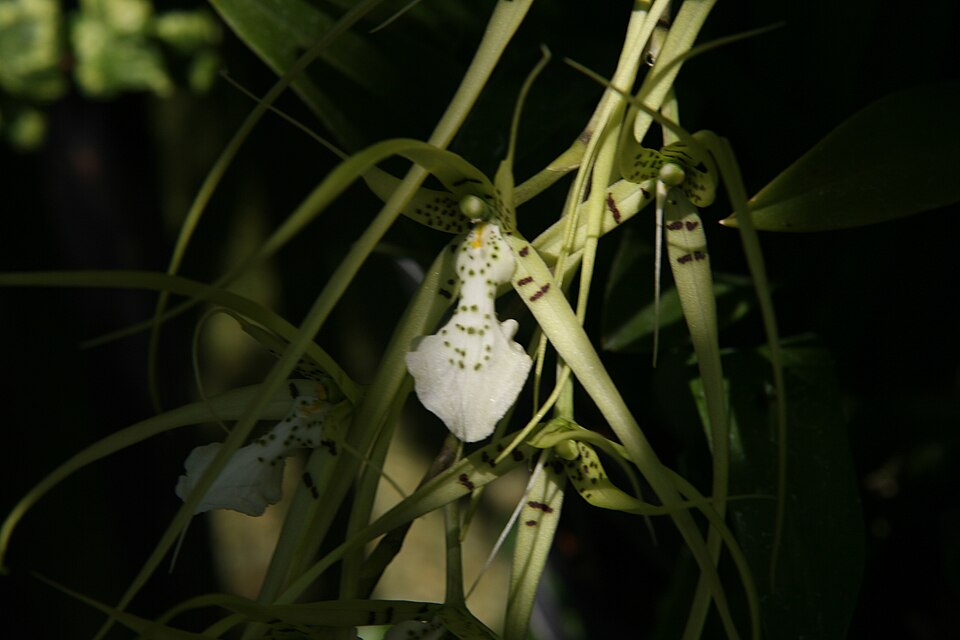
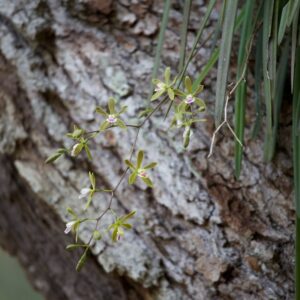
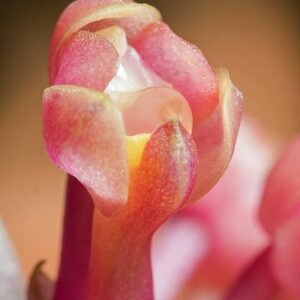
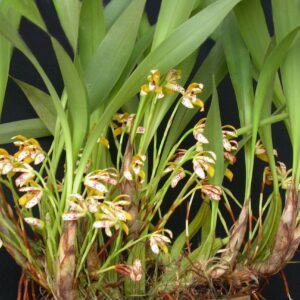
The long, narrow parts of a Brassia flower look like a spider’s legs. That silhouette explains the name “spider orchid”, but there is more to the resemblance than an attractive shape. To grow one well, start by separating the story of its flowers from the needs of the living plant.
Another species, Brassia maculata in the Smithsonian collection, has spotted, greenish flowers and occurs from southern Mexico into Central America and parts of the Caribbean. Its collection record gives a broad flowering window. That is a good reason not to promise one flowering month for the whole genus.
What to provide at home
The American Orchid Society’s Brassia guidance recommends intermediate temperatures, moderately bright light and an epiphytic orchid mix in a pot or basket. Water steadily through the year, letting roots dry somewhat between waterings. Repot when new roots begin after new shoots emerge. It also warns that disturbing the flower’s anther can trigger rapid post-pollination changes, including discolouration.
Think of that advice as a starting point, not a rigid timetable. Check the mix and roots before watering. If your plant dries much faster after a move, record the change and adjust your routine. Do not give it a prolonged dry rest merely because a calendar says winter.
For B. verrucosa specifically, the Royal Horticultural Society recommends bright filtered light, an open bark-based mix and complete drainage. Its guidance reduces water and feeding in winter. This species-level advice should be read alongside the plant’s actual growth and local conditions. A mature plant can be divided with at least three older pseudobulbs per section. Watch for mealybugs, aphids and scale insects.
Why a wasp might mistake a flower for prey
The North American Orchid Conservation Center describes the mechanism for Brassia caudata: spider-hunting female wasps mistake the flower for prey and attempt to grasp it. A pollen-bearing structure can stick to the insect’s head and reach another flower during a later visit. The relevant visitors are wasps, not spiders carrying pollen. This is prey deception, rather than a flower pretending to be a mate.
It is a striking example, but it does not mean that every flower on a windowsill will receive such a visit. Nor do you need to introduce wasps to enjoy the orchid’s flowers. Pollination is about reproduction; a flowering houseplant can be appreciated without manipulating it.
Display the flowers without crowding them
Give the long flower stems space away from busy walkways and other pots. Put the plant where you can inspect it easily instead of hiding its container inside an inaccessible arrangement. Before buying, ask for its exact name and the conditions in which it was grown.
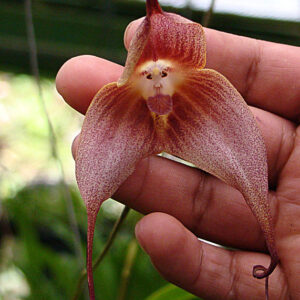
If you enjoy comparing orchid shapes, our guide to Dracula orchids explores a very different flower form. Similar curiosity does not mean similar care: choose each orchid for the conditions you can provide.
Usamos cookies em nosso site para fornecer a melhor experiência de uso, lembrando suas preferências e visitas repetidas. Ao clicar em “Aceitar”, concorda com a utilização de TODOS os cookies.
Este site usa cookies para melhorar sua experiência enquanto você navega pelo site. Destes cookies, os cookies que são categorizados como necessários são armazenados no seu navegador, pois são essenciais para o

funcionamento das funcionalidades básicas do site. Também usamos cookies de terceiros que nos ajudam a analisar e entender como você usa este site. Esses cookies serão armazenados em seu navegador apenas com

o seu consentimento. Você também tem a opção de bloquear esses cookies. Porém, a desativação de alguns desses cookies pode afetar sua experiência de navegação.
Os cookies necessários são absolutamente essenciais para o funcionamento adequado do site. Esta categoria inclui apenas cookies que garantem funcionalidades básicas e recursos de segurança do site. Esses cookies não armazenam nenhuma informação pessoal.
Quaisquer cookies que possam não ser particularmente necessários para o funcionamento do site e sejam usados especificamente para coletar dados pessoais do usuário por meio de análises, anúncios e outros conteúdos incorporados são denominados cookies não necessários. É obrigatório obter o consentimento do usuário antes de executar esses cookies no seu site.