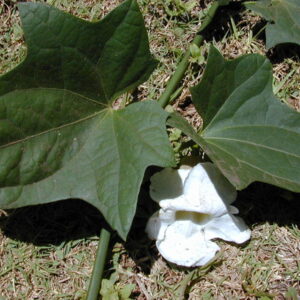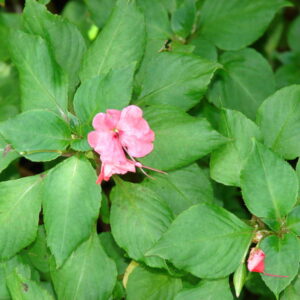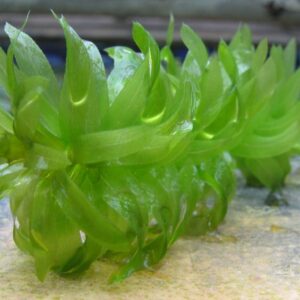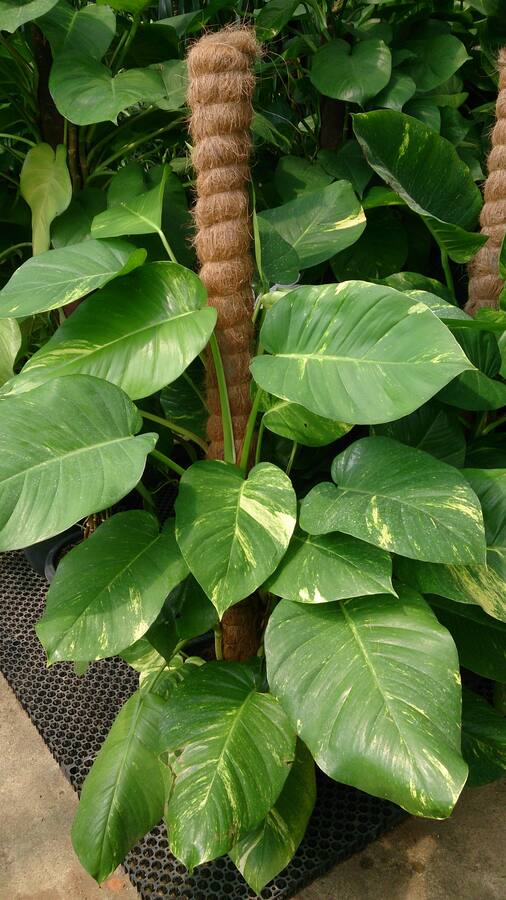
A trailing vine on a bookshelf and a climber with deeply divided leaves can both belong to Epipremnum. That does not make every plant sold as “pothos” the same species. The distinction matters when choosing a plant, comparing photographs and checking local restrictions.
Jurisdiction note: the legal restriction discussed here belongs specifically to Santa Catarina, a Brazilian state. It is not a nationwide Brazilian ban and must not be applied as the law of another state or country. Consult the environmental authority where the plant is located.
Two related plants, not interchangeable names
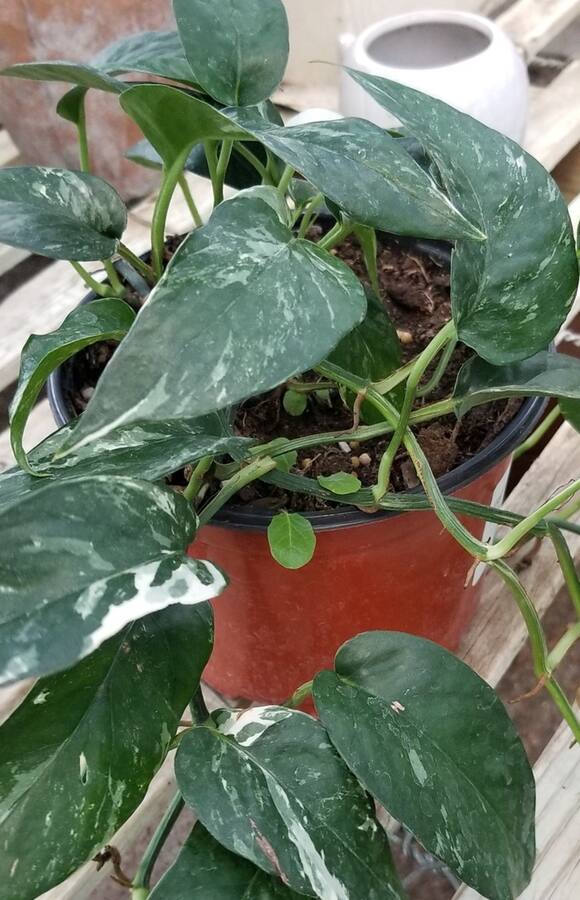
Epipremnum aureum, often called golden pothos, commonly has heart-shaped juvenile leaves with yellow or cream markings. E. pinnatum, called dragon-tail plant, has more elongated juvenile leaves; mature climbing foliage can become deeply divided. Leaf shape changes with maturity, so one juvenile leaf is not a reliable identification test.
There is also a naming trap. Older horticultural literature used E. pinnatum ‘Aureum’ for the plant now treated as E. aureum. NC State recognizes the two as distinct species. This adapted guide compares them rather than assuming that every plant pictured or described under the Brazilian name “jiboia” belongs to one species.
Check suitability before growing
In warm regions these vines can escape cultivation. University of Florida assessments flag E. aureum as having high invasion risk in Florida; that assessment is not a worldwide legal classification. Do not release unwanted plants or cuttings into woodland, waterways or vacant land. Check local rules before acquiring, moving or propagating either species.
In Brazil, Santa Catarina’s CONSEMA Resolution 271 of 30 May 2025 lists Epipremnum pinnatum in Category 1. Article 3 restricts activities including possession, trade, transport, propagation and cultivation; Article 4 provides for specific scientific-use authorization. This is a state rule, not a blanket nationwide ban. Readers in Santa Catarina should consult IMA rather than follow general cultivation instructions for this species. This restriction applies to Santa Catarina, Brazil, not automatically to other Brazilian states or foreign countries. Check the rules with the environmental authority where you live.
Light and placement indoors
Where cultivation is permitted, bright indirect light is a useful starting point. A room can look bright to a person while providing little light several metres from its window. Growth that becomes sparse is a reason to reconsider placement, not immediately add fertilizer. Protect foliage from harsh sun and keep pots away from drying heating or air-conditioning currents.
Trailing stems suit a shelf or hanging container; a support allows climbing growth. Decide which form fits the space before letting stems extend across furniture. A support does not guarantee immediate adult foliage: plant maturity and growing conditions still matter.
Water the pot, not the calendar
Use a container with drainage and a loose potting mix. Let the mix approach dryness before watering again, then allow excess water to drain. Empty standing water from the outer container. A fixed schedule such as three waterings a week ignores differences in pot size, temperature and light.
A wilted or yellow leaf does not by itself prove thirst. Check the mix first: saturated roots can also be associated with declining foliage. Choose a replacement pot only when needed, rather than moving a small root system straight into a very large container.
Routine maintenance and propagation
Prune long stems to maintain the desired shape, using clean tools and gloves. Where propagation is legal, stem cuttings need a node, the point where a leaf joins the stem; leaves alone are not a substitute. Cuttings can root in water before potting. Dispose of surplus pieces responsibly rather than discarding them outdoors. For water-rooted cuttings, remove the plant while cleaning and scrub the inside of the container before refilling. The US CDC recommends weekly emptying and scrubbing of water-holding containers to remove mosquito eggs and larvae; topping up alone is not cleaning.
Inspect leaf undersides and stem joints for pests. Clemson identifies mealybugs, scale and spider mites among possible problems. Isolate an affected plant and identify the cause before choosing treatment. An insecticide is not a universal answer to yellowing, nor a guarantee that every problem will disappear within two weeks.
Keep away from children and pets
These are ornamental plants, not edible leaves. Calcium oxalate crystals can irritate the mouth and throat if chewed or swallowed. ASPCA lists E. aureum as toxic to cats and dogs, with signs including drooling, vomiting and difficulty swallowing. NC State also identifies ingestion hazards for E. pinnatum. Keep both out of reach. Seek medical or veterinary advice after exposure; breathing or swallowing difficulties need urgent attention. Wear gloves when pruning and avoid touching your eyes. The Queensland Poisons Information Centre also warns that sap from these plants can irritate skin and eyes: the risk is not limited to ingestion. Wash your hands after handling.
For a different vigorous climber, see the blue trumpet vine identification and environmental-risk guide. It is a separate species, not a substitute that can be assumed suitable or unrestricted.
References
NC State: Epipremnum aureum; NC State: Epipremnum pinnatum; Clemson Extension: indoor pothos care; RHS: Epipremnum growing guide; ASPCA: golden pothos; UF/IFAS: invasion assessment; Santa Catarina: CONSEMA Resolution 271/2025.
Cover: Epipremnum aureum, Mokkie / Wikimedia Commons, CC BY-SA 3.0; resized and compressed under the same license. These identified photographs illustrate the comparison; they do not identify the original Portuguese photographs.
Source context: NC State, Clemson, ASPCA and UF/IFAS are United States sources; RHS guidance comes from the United Kingdom. Their horticultural and animal-health information is not local legislation for every reader. The Florida invasion assessment concerns Florida, USA, not a worldwide legal status.