A house that overheats in the afternoon does not necessarily need the same improvements as one that feels cold every morning. Thermal comfort starts with understanding the local climate and how the building gains, stores and loses heat. Insulation, shade and ventilation work together; none is a universal substitute for the others.
Start with your climate and your daily routine
Before choosing materials, record which rooms are uncomfortable, at what times and in which seasons. Note where direct sun enters, whether the roof space becomes hot and whether evenings bring cooler air. A bedroom used at night and a sunny living room used all afternoon can need different priorities.
In Brazil, ProjetEEE, developed with UFSC, provides a useful starting point for climate-responsive strategies. Its options include shading, natural ventilation, evaporative cooling, thermal mass and passive solar heating. Use local climate data and a building professional to decide which combination fits your home, rather than copying a design from another region.
How heat enters and leaves a home
Heat can pass through walls and roofs, arrive with incoming air or enter as sunlight through glazing. People, cooking and electrical equipment also add heat indoors. The Building America guide to passive and low-energy cooling recommends reducing unwanted heat gains before trying to remove them. That is why shading an exposed window may deserve attention before buying a larger cooling appliance.
Think in terms of three different tasks: slowing heat transfer, controlling sunlight and managing air movement. A material that stores heat is not necessarily a good insulator. An open window exchanges air, but that incoming air is not automatically cooler. These distinctions make product claims easier to assess.
Shade the right surfaces at the right time
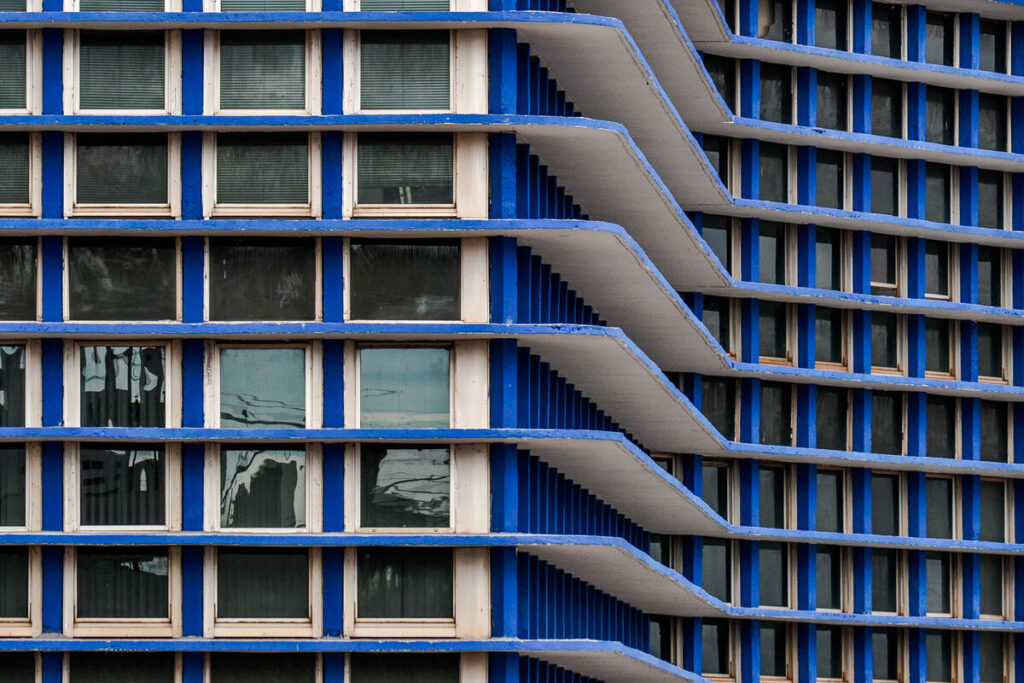
Eaves, awnings, external blinds, brise-soleil and trees can intercept direct sunlight. Their position and dimensions should respond to the sun’s path, the façade and seasonal needs. Where winters are cold, blocking useful winter sun may be undesirable. The Australian government’s shading guide explains the principle; its orientation examples must be adapted to your latitude and hemisphere. The cover photograph shows brise-soleil on a building in Cuiabá, Brazil, not a measured performance result.
Choose windows as complete systems
The frame and glass both matter. Compare the whole window’s U-value, which describes heat transfer, and its solar heat gain coefficient, which describes incoming solar heat. Lower U-values mean better insulation; the desired solar gain depends on the climate and position. Double or triple glazing is not just for cold climates. Films also need compatibility checks, since inappropriate applications can contribute to glass cracking. See Your Home’s glazing guidance.
Insulation and thermal mass do different jobs
Insulation slows heat transfer through the building envelope. It must form part of a coordinated roof, wall and floor design, with careful junctions and installation. Thermal mass, such as a concrete floor or masonry, stores heat and releases it later. Its usefulness depends on where it sits, whether it is shaded and whether stored heat can be removed when needed. New Zealand’s Building Performance guide warns that poorly applied mass can make a home less comfortable.
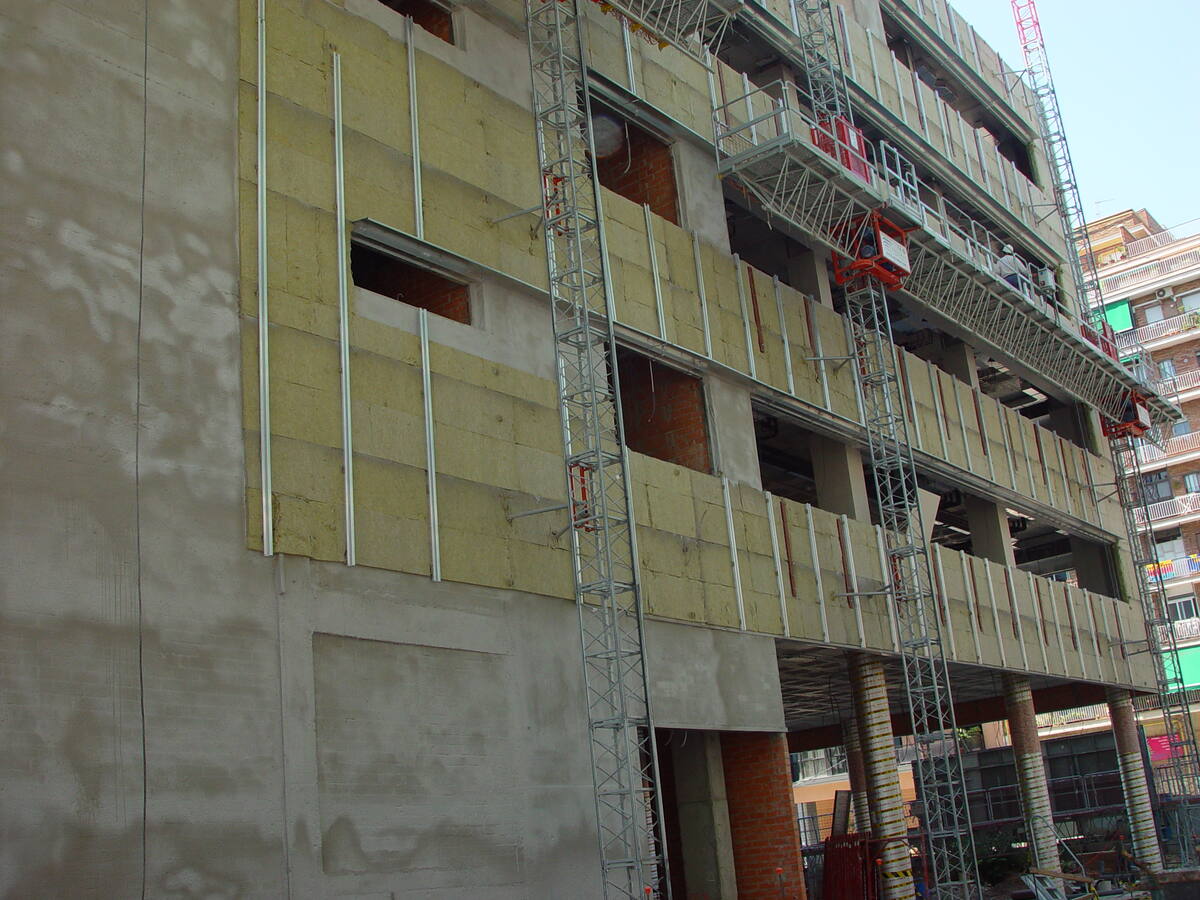
ProjetEEE’s guidance on thermal mass for cooling highlights its value where days and nights differ substantially in temperature. It also warns that sun-exposed roofs and western walls can accumulate unwanted heat. More mass is therefore not automatically better, especially in persistently hot, humid conditions. Design for the period when the room will actually be occupied.
Ventilate deliberately, not through uncontrolled leaks
Ventilation introduces outdoor air intentionally; airtightness limits unintended leakage. A home needs both a planned supply of fresh air and control over unwanted drafts. Improving seals should not mean blocking required vents or ignoring condensation. Your Home distinguishes these functions. Before changing openings, consider air quality, rain, insects, security and the needs of installed appliances.
Cross-ventilation and night cooling can be useful when outdoor conditions allow heat to leave. They are not guaranteed to maintain a chosen temperature in every weather pattern. Passive measures also have limits in humid climates; the Building America guide notes that they generally cannot match mechanical systems for precise temperature and humidity control. Plan a safe cooling option for extreme conditions rather than assuming open windows will always suffice.
Evaporative cooling suits some climates better than others
Evaporating water draws heat from its surroundings. This can be effective in dry climates, but its usefulness falls as air approaches saturation. Direct evaporative systems add moisture to the air; indirect systems work differently. ProjetEEE explains the distinction. Do not treat a humidifier and an air conditioner as interchangeable, or assume adding water improves an already humid room.
Where gardens, green walls and roofs fit
Vegetation can shade façades, and green roofs combine plants with a growing medium and other construction layers. Results depend on the system, not simply the presence of leaves. The Your Home guide to green roofs and walls discusses structural loads, drainage, waterproofing and maintenance. Lightweight planted systems do not automatically provide large thermal mass. Get professional assessment before adding a roof garden or attaching a heavy planted structure to a wall.
A practical plan for improvements
Start with a clear description of the discomfort, then ask for a coordinated proposal covering shade, the envelope and air movement. Compare expected benefits, installation requirements and maintenance rather than choosing by one advertised temperature reduction. For a new build or major renovation, a climate-responsive design should come before equipment sizing.
Thermal and acoustic performance also need to be considered separately: a product that helps one does not automatically solve the other. Our guide to sound insulation and acoustic comfort explains that part of the home-improvement puzzle.
Cover: Paulisson Miura, brise-soleil in Cuiabá, CC BY 2.0, resized and compressed. English editorial adaptation with technical references linked throughout; not a construction specification.