An African violet can turn a small windowsill into a flower display, but it does not thrive on a fixed watering calendar. The useful starting point is to watch three things: how much light reaches the leaves, whether the pot drains, and how quickly the mix dries.
Which violet are we talking about?
The familiar plant sold as Saintpaulia ionantha is now accepted by Kew as Streptocarpus ionanthus, in the Gesneriaceae family. The older name still appears on labels. Its origins lie in East Africa. It is not the same plant as the outdoor violets in the genus Viola.
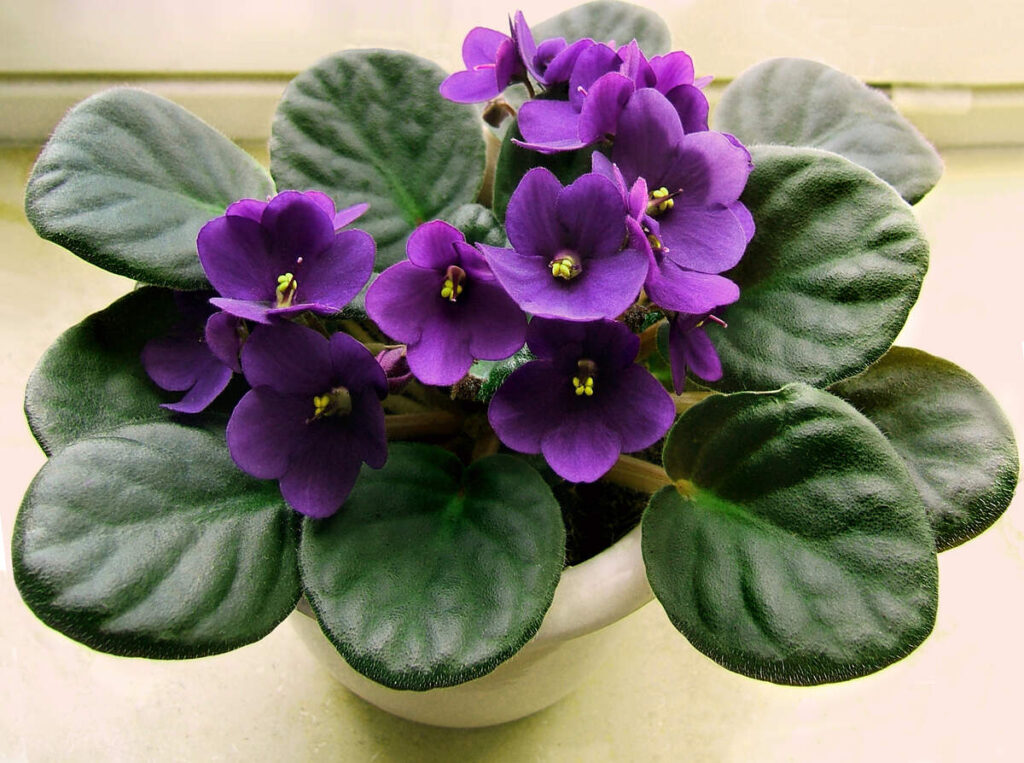
Houseplant collections include many cultivars and hybrids, not a different species for every flower colour. Some remain miniature; others develop a much wider rosette. Flowers may be single, doubled or ruffled, while leaves can be green or variegated. Check the cultivar label when choosing a plant for a narrow shelf.
Choose the position before changing the care
Provide bright, filtered light rather than a dark corner or intense midday sun. A sheer curtain can soften a sunny window. Long, weak leaf stalks and few flowers suggest insufficient light; pale or scorched leaves can point to excessive exposure. Move the plant gradually and observe new growth instead of repeatedly shifting it between extremes.
Keep the plant away from cold draughts and leaves away from cold glass. If daylight is inadequate, a plant light can help, but do not leave it on around the clock. The appropriate distance depends on the fixture, not on one universal measurement.
Pot and watering: moist is not waterlogged
Use a small container with drainage holes and an airy potting mix suitable for African violets. Do not bury the centre of the rosette. A large, deep pot is not automatically an upgrade: match the container to the roots rather than the spread of the foliage.
Let the surface begin to dry before watering. Apply room-temperature water to the mix, keeping the leaves and crown dry, then let the excess drain. Alternatively, stand the pot briefly in shallow water and remove it when moisture reaches the surface. Empty the saucer afterwards. The interval changes with heat, light, container and season.
Flowers, feeding and everyday maintenance
A plant with healthy leaves but no flowers needs a check of light, temperature and nutrition, not simply a stronger dose of fertiliser. Use a suitable complete fertiliser according to its label, avoiding excessive concentration. Too much feeding can build up salts and favour leaves over flowers. Do not fertilise a severely dry root ball.
Remove spent flowers and deteriorating leaves with clean, small scissors. A soft, dry brush helps remove dust without rough handling of the hairy foliage. Leave enough space between plants for air to circulate.
Cultivated African violet, cultivar unidentified. Photo: Calimo, CC BY-SA 3.0; resized and compressed.
How to grow another plant from a leaf
Choose a healthy, mature leaf and cut it with its stalk attached using clean tools. Insert the stalk into a moist, free-draining propagation mix, keeping the leaf blade above the surface. Keep it warm in indirect light, with humidity around the cutting but without soaking the mix. New plantlets take time to form; separate them carefully once established. This is not an instant route to a flowering pot.
Spots and pests need a diagnosis
A leaf spot is not automatically a viral disease. Cold water on foliage can mark leaves, while persistent wetness can cause root or crown rot. Inspect new growth and leaf undersides for pests. Cottony deposits or distorted growth warrant closer investigation. Separate a suspect plant and seek identification before choosing a treatment; an arbitrary garden insecticide is not a universal remedy.
What about pets?
The ASPCA lists African violets (Saintpaulia spp.) as non-toxic to cats and dogs. That classification is not a recommendation to eat ornamental plants or feed them to animals. Keep fertilisers and other care products out of reach, and consult a veterinarian if an animal develops symptoms after chewing a plant.
Planning a larger display? See our indoor garden guide for organising plants around the conditions your home actually provides.
Usamos cookies em nosso site para fornecer a melhor experiência de uso, lembrando suas preferências e visitas repetidas. Ao clicar em “Aceitar”, concorda com a utilização de TODOS os cookies.
Este site usa cookies para melhorar sua experiência enquanto você navega pelo site. Destes cookies, os cookies que são categorizados como necessários são armazenados no seu navegador, pois são essenciais para o

funcionamento das funcionalidades básicas do site. Também usamos cookies de terceiros que nos ajudam a analisar e entender como você usa este site. Esses cookies serão armazenados em seu navegador apenas com

o seu consentimento. Você também tem a opção de bloquear esses cookies. Porém, a desativação de alguns desses cookies pode afetar sua experiência de navegação.
Os cookies necessários são absolutamente essenciais para o funcionamento adequado do site. Esta categoria inclui apenas cookies que garantem funcionalidades básicas e recursos de segurança do site. Esses cookies não armazenam nenhuma informação pessoal.
Quaisquer cookies que possam não ser particularmente necessários para o funcionamento do site e sejam usados especificamente para coletar dados pessoais do usuário por meio de análises, anúncios e outros conteúdos incorporados são denominados cookies não necessários. É obrigatório obter o consentimento do usuário antes de executar esses cookies no seu site.