The Peruvian apple cactus has a presence that a small nursery pot can easily hide. Its upright, branching stems can eventually turn it into a substantial feature of the garden. Before bringing one home, think about where a tall, spiny plant will fit, not just where today’s pot looks attractive.
A name that can be misleading
This guide concerns Cereus repandus, also known as cadushi. Despite the English name “Peruvian apple cactus”, Kew places its native range in the southern Caribbean and from Venezuela to Colombia, not Peru. It belongs to the cactus family, Cactaceae, and grows in seasonally dry tropical habitats.
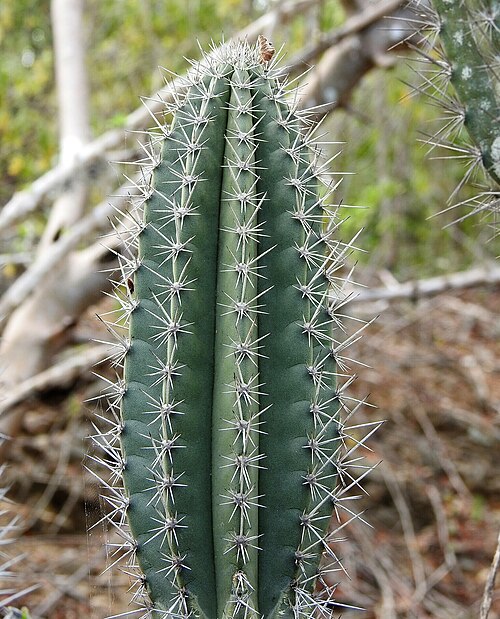
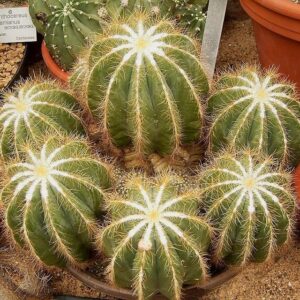
Plant names in shops deserve attention. Cereus peruvianus is a synonym of C. repandus, but that name has also been applied to other columnar cacti in horticulture. Ask for reliable identification rather than assuming that every “Peruvian cactus” is the same species. The photograph here shows an identified plant from Curaçao.
What to expect as it grows
Its ribbed, grey-green to bluish stems branch as the plant develops. In favourable conditions it can reach around 10 metres; a container limits development but does not turn it into a permanently miniature cactus. Creamy-white flowers open at night and each lasts a single night.
The species produces edible fruit, as described by horticultural sources, but that is not an invitation to taste fruit from an unidentified ornamental cactus. Confirm the species and the plant’s treatment history first. Nor does edible fruit mean that spines or all other plant parts are harmless.
Sun, space and drainage
Choose a bright, sunny position and protect the plant from freezing conditions. In a pot, use a freely draining cactus mix and drainage holes. Water during active growth, then allow the mix to dry rather than remain saturated; reduce watering markedly when growth slows. There is no useful universal weekly schedule.
Keep the plant away from narrow paths, doorways and places where children or animals can brush against the spines. Moving a large specimen is not the same job as repotting a small houseplant: plan for its weight and stability, and get experienced help if it cannot be handled safely.
Repotting and making another plant
Repot an overcrowded plant into a slightly larger container, not an oversized one. Protect your hands from the spines.
For stem cuttings, use healthy material. Let the cut surface dry and form a callus before planting in an airy mix, kept only slightly moist while roots develop. An unrooted cutting needs different treatment from an established cactus.
When something looks wrong
White, cottony patches can indicate mealybugs, while scale insects may be less conspicuous. Inspect a new plant before placing it beside the collection. Identify a pest before choosing treatment; a generic insecticide is not a solution for every mark on a cactus.
Persistent excess moisture can cause rot. If the base becomes soft or discoloured, check drainage and moisture instead of automatically adding more water. A dark patch alone does not establish which disease is present. The practical goal is a sunny, well-drained position and observation, not a complicated routine of preventive chemicals.
Usamos cookies em nosso site para fornecer a melhor experiência de uso, lembrando suas preferências e visitas repetidas. Ao clicar em “Aceitar”, concorda com a utilização de TODOS os cookies.
Este site usa cookies para melhorar sua experiência enquanto você navega pelo site. Destes cookies, os cookies que são categorizados como necessários são armazenados no seu navegador, pois são essenciais para o

funcionamento das funcionalidades básicas do site. Também usamos cookies de terceiros que nos ajudam a analisar e entender como você usa este site. Esses cookies serão armazenados em seu navegador apenas com

o seu consentimento. Você também tem a opção de bloquear esses cookies. Porém, a desativação de alguns desses cookies pode afetar sua experiência de navegação.
Os cookies necessários são absolutamente essenciais para o funcionamento adequado do site. Esta categoria inclui apenas cookies que garantem funcionalidades básicas e recursos de segurança do site. Esses cookies não armazenam nenhuma informação pessoal.
Quaisquer cookies que possam não ser particularmente necessários para o funcionamento do site e sejam usados especificamente para coletar dados pessoais do usuário por meio de análises, anúncios e outros conteúdos incorporados são denominados cookies não necessários. É obrigatório obter o consentimento do usuário antes de executar esses cookies no seu site.