Trees, rivers and green spaces are part of the response to urban heat and flooding. On 11 November 2026, at COP31, Brazil’s Ministry of the Environment and Climate Change presented its National Strategy for Nature-based Solutions in Urban Areas.
What the proposal sets out
According to the ministry, the plan aims to bring ecosystem protection and restoration into urban planning. Possible measures include rain gardens, riverbank restoration, linear parks, community gardens and planting native trees.
The target is to reach around 1,000 municipalities with solutions implemented and recorded by 2035, with an intermediate goal of approximately 490 cities in 2030. These are announced targets, not results already achieved.
Why it matters to gardeners
The proposal connects gardening with decisions about the city. Green spaces are considered alongside drainage, land use and infrastructure, prioritising vulnerable communities and local participation.
The next questions are practical: which projects move beyond the announcement, how will they be maintained, and what will change in each neighbourhood? The launch begins an implementation stage whose progress still needs to be followed.
For a broader view of how outdoor spaces are planned, see our landscape design guide.
Source and image
Brazil’s Ministry of the Environment and Climate Change, news published on 13 November 2026.
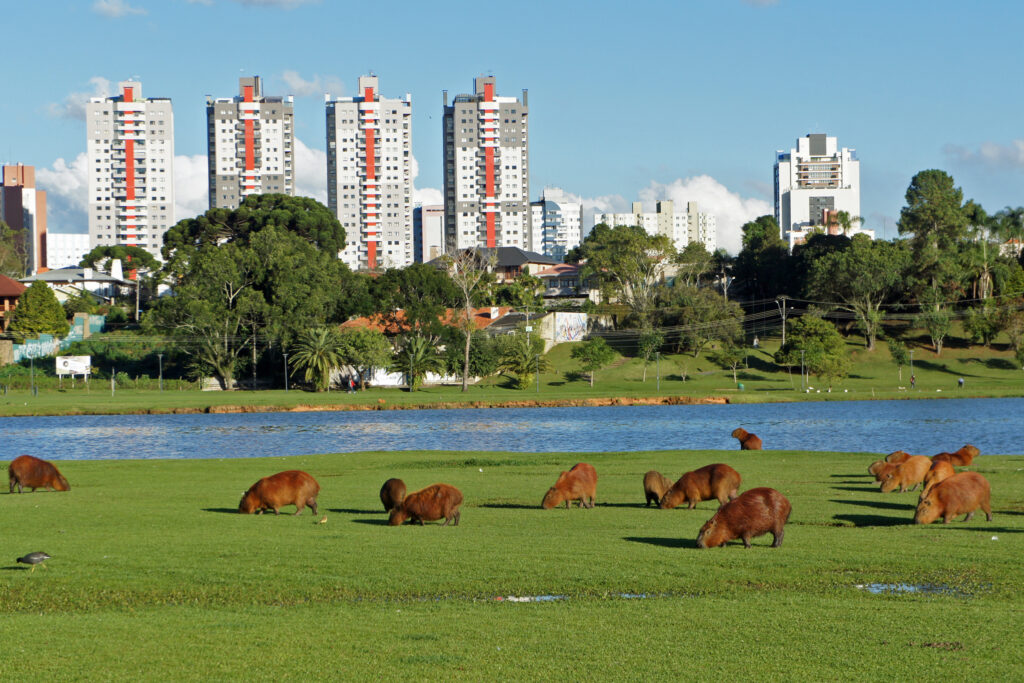
Cover: Barigui Park, Curitiba, photographed in 2015. Illustrative archive image, not a photograph of the launch. Mariordo (Mario Roberto Duran Ortiz)/Wikimedia Commons, CC BY-SA 4.0. Existing site adaptation.