Brazilian plant material now has a safety backup outside the country. According to an Embrapa report published on November 6, the institution made its first deposit on November 5 at the Plant Cryo Vault, a cryogenic bank hosted by the International Potato Center (CIP) in Lima, Peru. Brazil, Chile and Ecuador took part in the initiative.
Pineapple and cassava in the vault
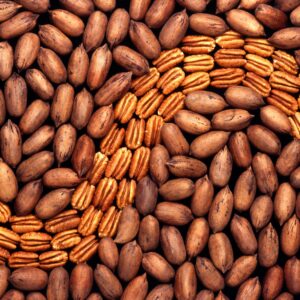
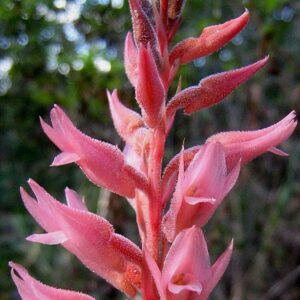
Embrapa reports that the deposit contains 14 samples of pineapple material and 11 of cassava, prepared by its Cassava and Fruits unit in Cruz das Almas, Bahia. These figures refer to conserved material, not 25 different species.
The aim is to maintain a reserve of genetic diversity. According to Embrapa, the samples remain the property of the depositing countries and can be recovered when needed.
Why use such low temperatures?
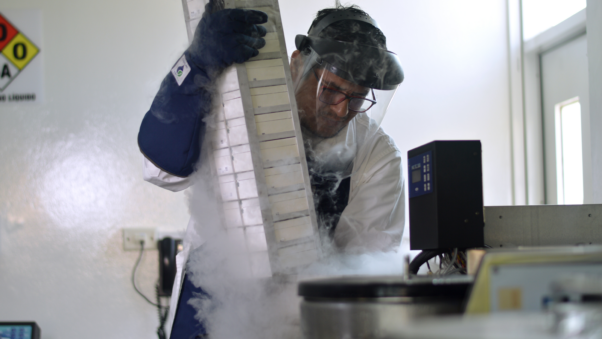
CIP explains that cryopreservation uses liquid nitrogen at around −196°C to conserve plant structures such as shoot tips and embryonic axes. It adds options for plants whose diversity cannot be adequately protected through conventional seed storage alone.
This is particularly relevant to crops propagated vegetatively and species whose seeds are sensitive to drying. The goal is to add protection to collections already maintained by countries, against risks such as disasters and climate change.
What is stored, and how can it grow again?
This is not about storing whole pineapples or cassava roots as frozen food. The purpose is to conserve plant material capable of developing into plants again. The structures selected and their preparation must follow a crop-appropriate protocol, so cooling does not simply destroy the tissue.
In its documentation on potato cryopreservation, CIP makes a useful distinction: surviving thawing is not enough. The material must be able to regenerate a normal plant with a stem, leaves, roots and a functioning growing point. This illustrates the technique’s quality standard without assuming that the same protocol was used for Brazil’s pineapple and cassava samples.
A safety backup complements a living collection
The vault reduces the risk of losing an entire collection because of a problem at its original location. It does not replace identification, documentation and maintenance by the depositing institutions. A sample’s value also depends on knowing what it represents and maintaining the ability to recover it when necessary.
This role differs from holding stock for immediate distribution to growers. CIP’s announcement describes custody of backup copies and their return to depositing countries on request. The news therefore does not announce seeds or seedlings for sale, or a newly released commercial variety.
A reserve for the future
Projeto Jardinando’s perspective: conserving a plant also means preserving variation within a crop. The news helps us see genebanks as part of research and food-security infrastructure, even when their work takes place far from gardens and farms.
Opening photograph: International Potato Center (CIP) press material on cryopreservation. The image is not presented as a record of the November 5 ceremony. Credit: CIP, CC BY 4.0, under the source publication’s license. No alterations. Original journalistic summary; sources consulted for the original article on November 11, 2026.
Usamos cookies em nosso site para fornecer a melhor experiência de uso, lembrando suas preferências e visitas repetidas. Ao clicar em “Aceitar”, concorda com a utilização de TODOS os cookies.
Este site usa cookies para melhorar sua experiência enquanto você navega pelo site. Destes cookies, os cookies que são categorizados como necessários são armazenados no seu navegador, pois são essenciais para o

funcionamento das funcionalidades básicas do site. Também usamos cookies de terceiros que nos ajudam a analisar e entender como você usa este site. Esses cookies serão armazenados em seu navegador apenas com

o seu consentimento. Você também tem a opção de bloquear esses cookies. Porém, a desativação de alguns desses cookies pode afetar sua experiência de navegação.
Os cookies necessários são absolutamente essenciais para o funcionamento adequado do site. Esta categoria inclui apenas cookies que garantem funcionalidades básicas e recursos de segurança do site. Esses cookies não armazenam nenhuma informação pessoal.
Quaisquer cookies que possam não ser particularmente necessários para o funcionamento do site e sejam usados especificamente para coletar dados pessoais do usuário por meio de análises, anúncios e outros conteúdos incorporados são denominados cookies não necessários. É obrigatório obter o consentimento do usuário antes de executar esses cookies no seu site.