A good pool garden is pleasant to look at and easy to use. It leaves space to walk, keeps maintenance manageable and does not hide the water behind dense planting. The best design begins with how people use the area, not with filling every empty corner.
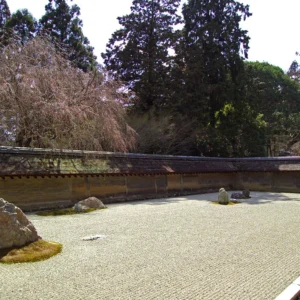
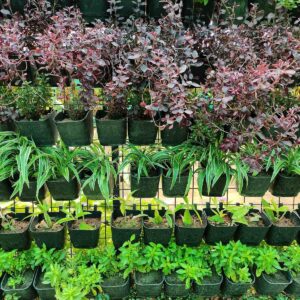
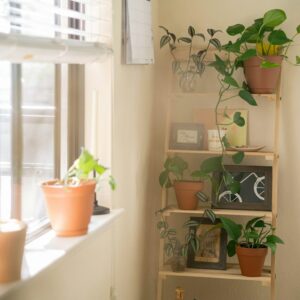
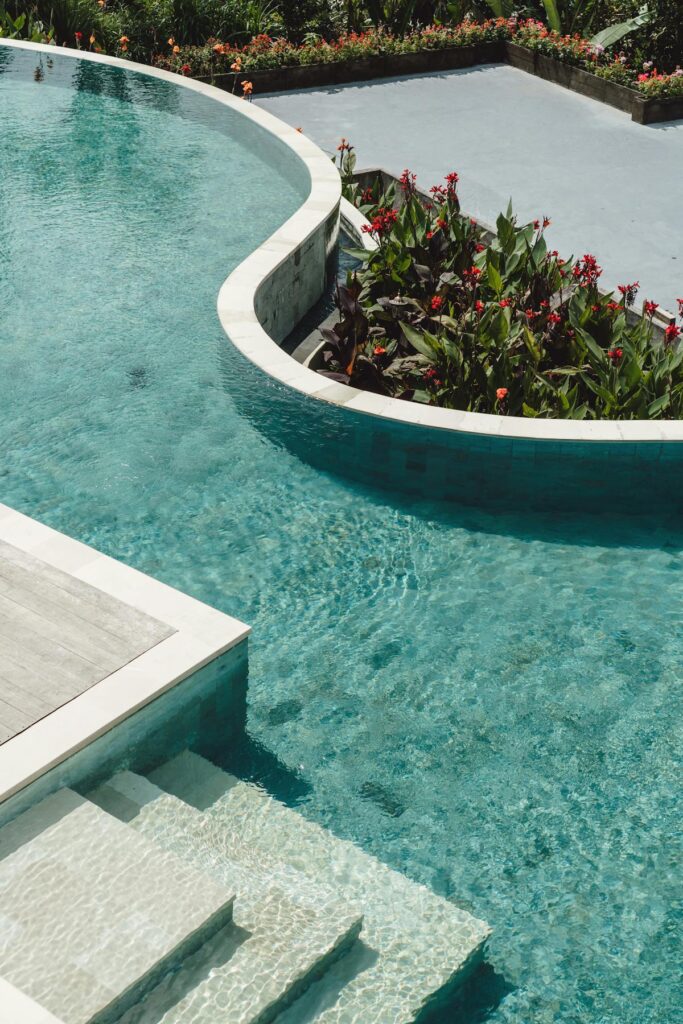
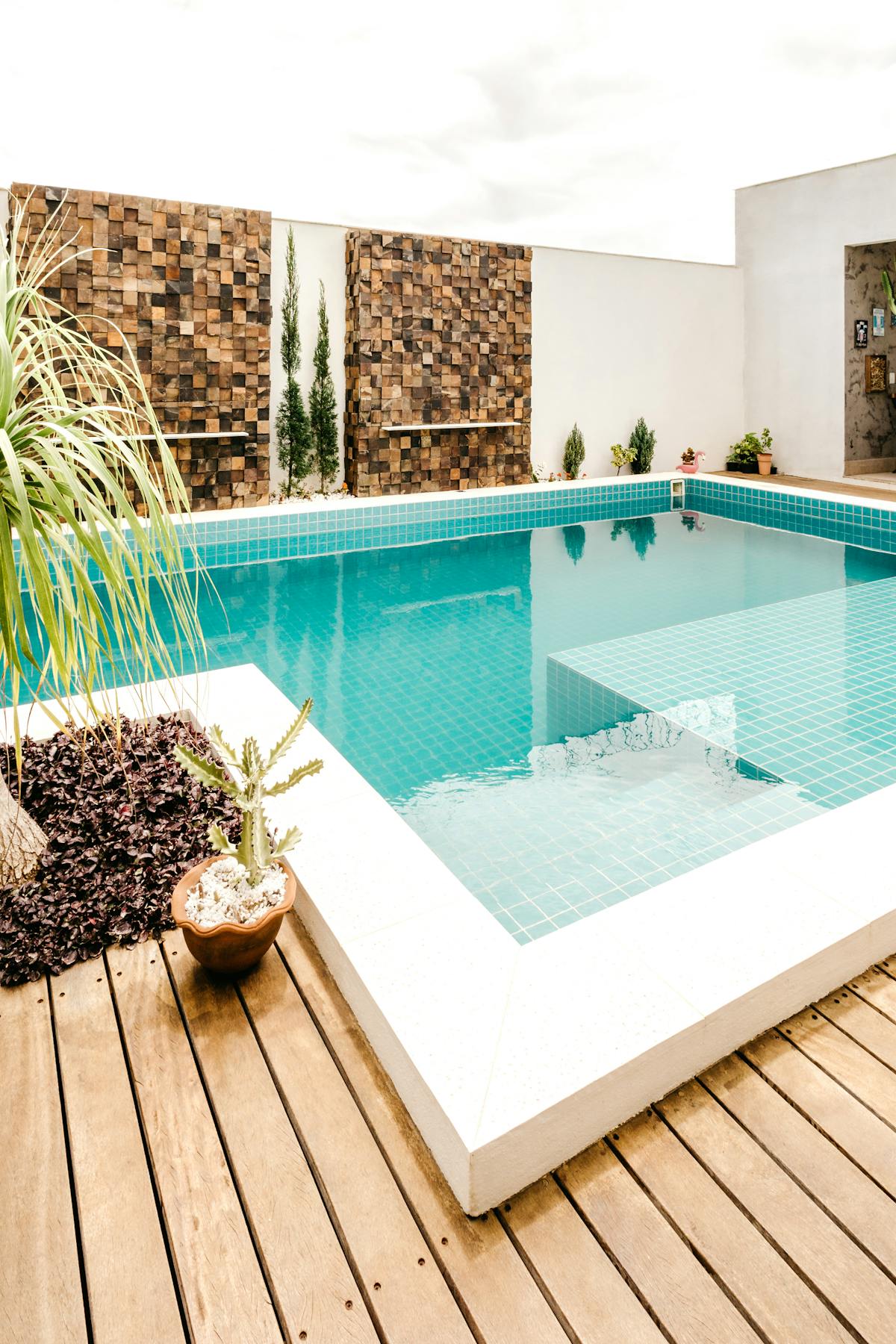
The photographs illustrate planting and composition only. They do not show a complete safety installation and should not be copied as a model of pool protection.
Plan circulation and safety before planting
Sketch the pool, entrances, seating, equipment access and existing plants. Observe sun, wind and drainage, then decide where shade and privacy are useful. UF/IFAS recommends analysing the site and household needs before drawing the planting plan. Allow for mature plants rather than arranging young specimens as if they will never grow.
Safety barriers belong in that first plan. CDC guidance recommends fencing that fully separates the pool from the home and yard, with self-closing, self-latching gates, alongside continuous close supervision of swimmers. Landscaping is not a substitute. Have the design checked against local requirements, and keep gates and sightlines unobstructed.
Leave generous clear space where people walk barefoot, enter the water or move loungers. Avoid thorny or sharply pointed foliage along these routes. Position privacy planting where it screens an unwanted view without blocking the view of someone in the pool. Ask a qualified professional to assess paving, drainage, structures and lighting near water.
Choose plants for more than their appearance
UF/IFAS notes that poolside plants must fit their space, limit fallen debris and tolerate occasional splashes. No plant should be assumed to withstand repeated soaking with chlorine or salt water. Its warm-climate examples include orange bird of paradise and compact hibiscus, but these are candidates to assess, not universal choices for every garden.
For each candidate, check climate, sun exposure, mature height and width, roots, thorns and toxicity. Consider the household too: a plant out of reach in one garden may be accessible to a child or pet in another. Choose fewer well-matched species rather than a collection that requires constant corrective pruning.
Place larger plants where their future canopy will not overhang the water unnecessarily. Leave room to reach the bed for cleaning. You can repeat a small group of plants to connect different areas, then use one contrasting form as an accent. A shaded seating area can be planned separately from planting immediately beside the pool.
Do not rely on “mosquito-repellent” planting
Colorado State University Extension explains that simply growing aromatic plants does not provide reliable mosquito protection. A fragrant bed is not a protective barrier. Lavender is also attractive to bees, as the RHS notes, so it is not a way to keep all insects away from swimmers.
Brazil’s Ministry of Health recommends eliminating water that can collect in containers, keeping gutters and drains clear and maintaining treated pool water. Include plant saucers and unused pots in your inspection. Follow local public-health advice on personal protection; do not replace it with homemade leaf preparations.
Pollinators are part of a healthy garden. If you want a flower-rich area, plan it away from the busiest poolside seating and circulation, instead of treating every visiting insect as a pest.
Make garden and pool maintenance work together
Create a practical checklist: remove fallen leaves and pruning debris, inspect plants, keep paths clear and check irrigation. Water according to the species and soil conditions, not because the plant happens to be beside a pool. Keep garden runoff and loose materials from washing into the water.
Store pool chemicals securely away from children and pets and follow their labels, as CDC advises. Do not use them as garden treatments. Keep access to pool equipment clear, and coordinate major pruning or soil work with cleaning so one job does not undo the other.
Sources and credits
UF/IFAS: landscape planning; UF/IFAS: poolside plants; CDC: safe and healthy pools; CSU: plants and mosquito repellency; RHS: lavender; Brazilian Ministry of Health: mosquito prevention.
Cover: Polina Kuzovkova / Unsplash, resized, under the Unsplash License.