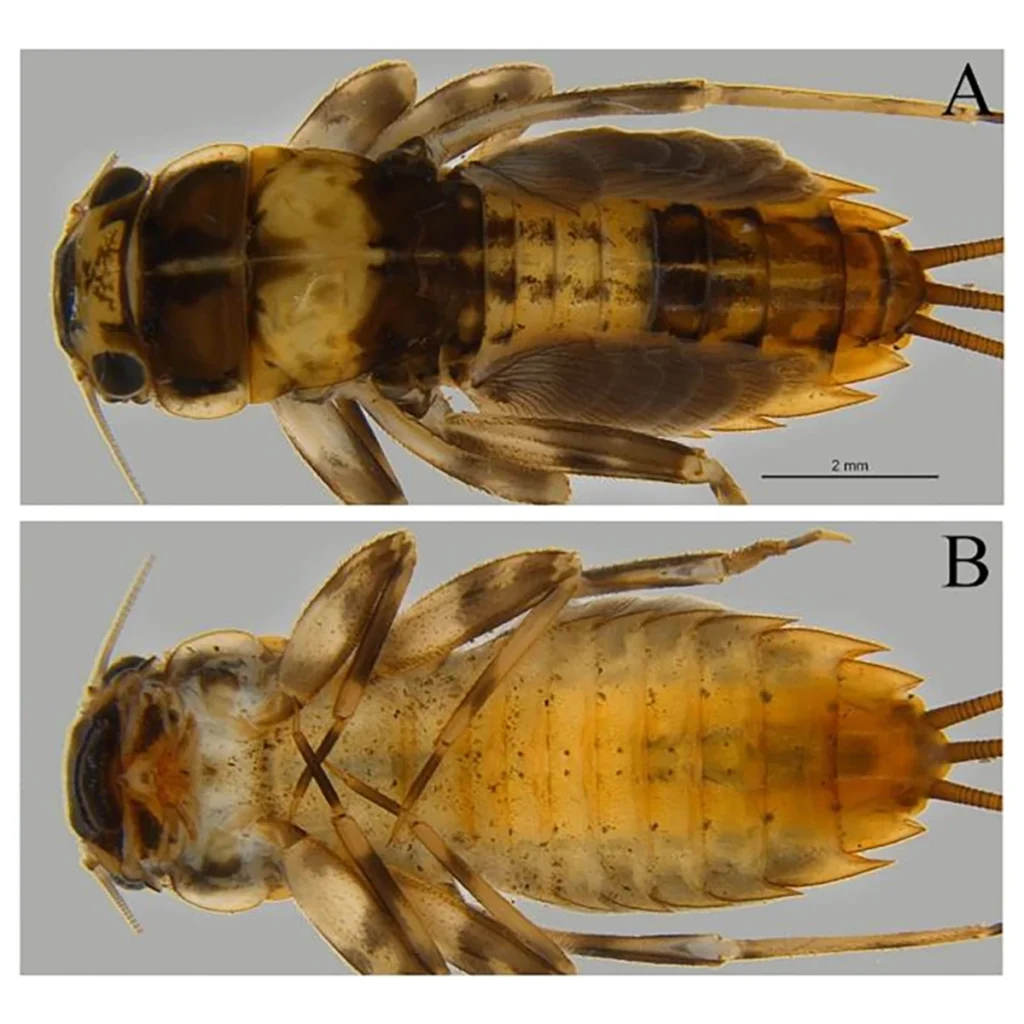
A small insect from Serra da Canastra, in Brazil’s Minas Gerais state, now bears a familiar name in Brazilian music: Massartella bituca. The name honors musician Milton Nascimento, known as Bituca. It is one of three new mayfly species described by researchers from the Federal University of Viçosa (UFV) and partner institutions.
For decades, several mayfly populations in southern and southeastern Brazil went under the name Massartella brieni. To find out which belonged to the same species, researchers compared sections of DNA and examined eggs, nymphs and adults. This let them match life stages that can be hard to identify when studied separately.
The study also describes M. helenae and M. demoulini and recognizes M. fruhstorfferi again as a distinct species. An earlier paper in the Revista Brasileira de Entomologia described M. aurora from specimens in Serra do Brigadeiro State Park.
What mayflies can tell us about streams
Adult mayflies are short-lived. Before taking flight, they spend the nymph stage in water. In the streams surveyed, the team found nymphs under rocks and submerged leaves. Identifying which species live in a stream can make monitoring more precise because these insects are sensitive to water conditions. The absence of a species alone does not establish pollution: researchers need to know where it normally occurs and compare other signs of stream health.
Why the discovery matters
The researchers documented M. bituca in Serra da Canastra National Park. Some other species in the study have even narrower known ranges, with records from streams in particular mountains. Knowing where they occur helps identify which waterways to monitor and protect.
Cover image: Male and female Massartella bituca nymphs, panels A and B of Figure 26, Frontiers in Insect Science. Cortes, Lima, Takiya, Hoehne, Souto, Sarmento and Salles (2026), CC BY 4.0. Panels cropped and rearranged for the cover.
Usamos cookies em nosso site para fornecer a melhor experiência de uso, lembrando suas preferências e visitas repetidas. Ao clicar em “Aceitar”, concorda com a utilização de TODOS os cookies.
Este site usa cookies para melhorar sua experiência enquanto você navega pelo site. Destes cookies, os cookies que são categorizados como necessários são armazenados no seu navegador, pois são essenciais para o

funcionamento das funcionalidades básicas do site. Também usamos cookies de terceiros que nos ajudam a analisar e entender como você usa este site. Esses cookies serão armazenados em seu navegador apenas com

o seu consentimento. Você também tem a opção de bloquear esses cookies. Porém, a desativação de alguns desses cookies pode afetar sua experiência de navegação.
Os cookies necessários são absolutamente essenciais para o funcionamento adequado do site. Esta categoria inclui apenas cookies que garantem funcionalidades básicas e recursos de segurança do site. Esses cookies não armazenam nenhuma informação pessoal.
Quaisquer cookies que possam não ser particularmente necessários para o funcionamento do site e sejam usados especificamente para coletar dados pessoais do usuário por meio de análises, anúncios e outros conteúdos incorporados são denominados cookies não necessários. É obrigatório obter o consentimento do usuário antes de executar esses cookies no seu site.