News • Original report: November 11, 2026
Three plants in the genus Pleroma, part of the Melastomataceae family, have been scientifically described from records in Brazil’s Atlantic Forest, in the states of Minas Gerais and Espírito Santo. The research appeared in Phytotaxa on October 6, and Brazil’s National Institute of the Atlantic Forest (INMA) reported the discovery on October 20, 2026.
Where the new species live
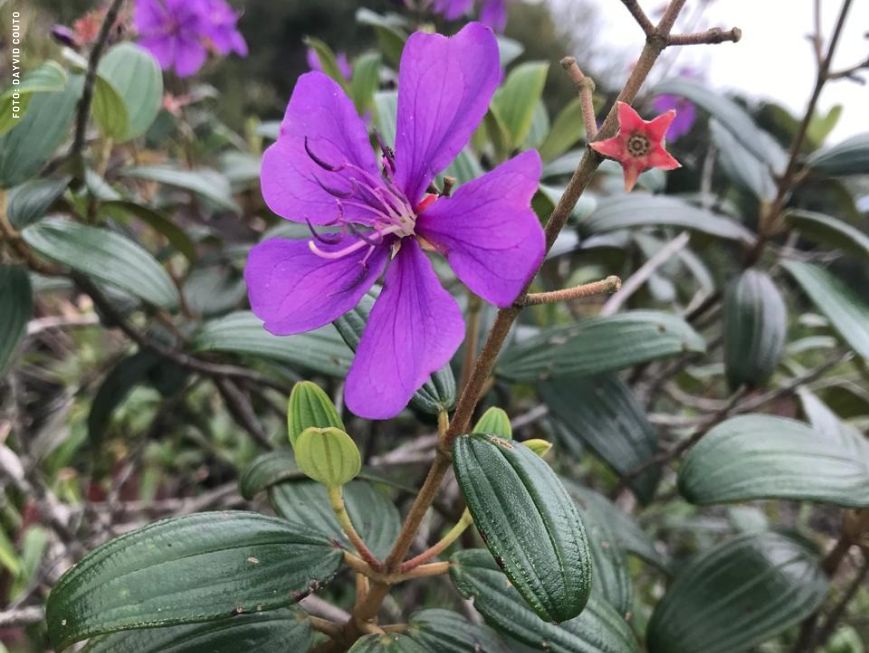
Pleroma leucotrichum was found on rocky outcrops in Castelo, Espírito Santo. P. latisepalum has records from Itaipé and Novo Cruzeiro, Minas Gerais. P. squamipilosum occurs in Nova Venécia, Espírito Santo, and in Minas Gerais. These rocky habitats, known as inselbergs, can support plants with very limited distributions.
The researchers’ preliminary assessments classify P. leucotrichum as Endangered and P. latisepalum as Vulnerable. P. squamipilosum is treated as Data Deficient. These are assessments presented in the study, not confirmation of inclusion on an official government list.
How is an undescribed species recognized?
An unusual flower in a photograph is only a clue. INMA explains that the researchers compared leaves, flowers and reproductive structures with botanical collections and earlier descriptions. The authors are Fabrício Schmitz Meyer, Dayvid Rodrigues Couto, Ludovic Jean Charles Kollmann and Renato Goldenberg.
The abstract of the Phytotaxa paper places P. latisepalum in the P. heteromallum complex, a group of similar-looking species with narrow distributions. This helps explain why identification depends on careful comparison, not flower color alone. The published taxonomic description enables other specialists to assess and recognize the plants.
Why rocky outcrops matter
Inselbergs are isolated rocky elevations. Shallow soils, strong sunlight and limited water create conditions unlike those in the surrounding forest. Plants may be specialized for these small habitats. An apparently sparsely vegetated stretch of rock should therefore not be mistaken for a place with no biodiversity to protect.
The study reports that all three species are still known from few collections and may be regional endemics, meaning plants restricted to a particular region. “Data Deficient,” in the case of P. squamipilosum, reflects gaps in specimens and distribution records, not an absence of risk. Further surveys may change our understanding of where each species lives and the pressures it faces.
What the discovery helps us understand
Describing a species means recognizing and documenting a form of life that already existed. The discovery reminds us that learning about plants is part of conserving them: without identification, monitoring populations and understanding habitats becomes more difficult.
Projeto Jardinando’s perspective: a newly described plant should not automatically be treated as a new gardening novelty. The interest here is in understanding its natural history and valuing its habitat.
References and image credit
Scientific paper in Phytotaxa, October 6, 2026. · INMA: three new plant species from the Atlantic Forest, October 20, 2026. · MCTI: report on the discovery.
Opening photograph: Pleroma leucotrichum in Castelo, Espírito Santo, Brazil. Dayvid Couto / INMA press material, as credited on the photograph. Reproduced without alterations under CC BY-ND 3.0, indicated by the source portal. Original journalistic summary. Sources consulted for the original article on November 11, 2026.