A bedroom overlooking a busy road and a living room where every conversation seems to echo have different problems. Buying the same acoustic panel for both can mean spending money without solving either. Sound insulation limits sound travelling between spaces; acoustic treatment changes how sound behaves inside a space. Start with that distinction, then follow the noise from its source to where it bothers you.
1. Understand what you are hearing
Sound is vibration transmitted through a medium, including air and building materials. Frequency helps describe whether it is low-pitched, like a deep motor hum, or high-pitched, like a whistle. Sound levels expressed in decibels use a logarithmic scale: they cannot be added like ordinary numbers. A product specification therefore needs more than an impressive number followed by “dB”. See the OSHA guide to noise and acoustics.
Inside a room, sound reflected repeatedly by hard surfaces can linger after the source stops. This is reverberation, not necessarily a distinct, repeated echo. If speech becomes clearer after adding suitable absorbing surfaces, you have improved the room’s acoustics. That does not prove that the wall now blocks a neighbour’s television.
2. Find the source before choosing materials
Make a short record: which room is affected, at what times, and whether the sound resembles voices, footsteps, traffic or equipment vibration. Compare the experience with windows open and closed. Is the disturbance mainly coming through an opening, or can you feel vibration in a floor or wall? These observations help define the problem; they are not a substitute for professional measurements when designing substantial work.
The Australian government’s Your Home noise-control guide explains why the source and transmission path should guide the solution. In a renovation, agree on the problem to be reduced before choosing a product. For example, “make conversation clearer in this room” and “reduce traffic heard in this bedroom at night” are different design briefs.
3. Reduce noise at its source
Maintain noisy machinery, repair loose components and compare quieter equipment when replacement is due. Correctly selected vibration-isolating mounts can reduce the transfer of vibration to a building, but improvised padding is not a universal solution. The HSE’s noise-control guidance prioritises measures at the source rather than relying only on barriers around the listener.
Equipment enclosures need professional design for ventilation, heat, access and safety. Never move a fuel-powered portable generator into a home, garage or other enclosed or partly enclosed space to make it quieter. Exhaust can cause fatal carbon monoxide poisoning. Follow the CDC/NIOSH generator safety guidance and the equipment manufacturer’s instructions.
4. Treat reverberation without confusing it with insulation
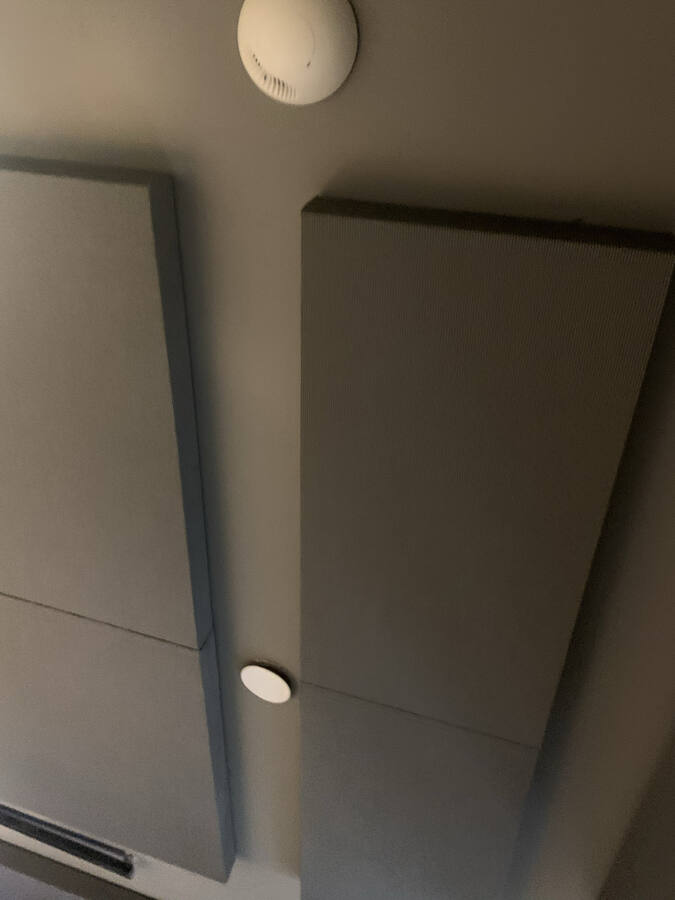
Absorptive panels and suitable soft furnishings reduce reflected sound. Their effectiveness depends on the frequencies involved, their construction and placement. They do not remove the direct sound travelling from a source to the listener. This distinction is explained in NIOSH’s engineering-control guidance. Covering a wall with foam is not equivalent to rebuilding a sound-insulating partition.
5. Look at the whole building system
Sound may cross a separating wall directly or take indirect routes through adjoining floors, walls and junctions. These are called flanking paths. The National Research Council of Canada includes those routes in predictions of room-to-room transmission. A good wall on paper can disappoint when other paths remain untreated.
Windows and doors
Consider the frame, seals, glazing and installation together. More panes do not automatically mean better protection against every type of noise. Ask for test information for the complete proposed system, not just the glass. The New Zealand Building Performance guide discusses why air gaps and glazing details matter. Seal unintended gaps without blocking ventilation that the building or an appliance needs.
Floors and partitions
Footsteps create impact noise, so a solution aimed at airborne voices may not solve them. Resilient floor systems, wall assemblies and their junctions require coordinated design and careful installation. Avoid promises of a fixed reduction based only on the thickness of concrete, a door or a layer of insulation. Consult an acoustics professional for significant work, and check the standards and building requirements applicable to your location and project.
6. What can a garden contribute?
A hedge can screen an unattractive road, but a narrow row of plants should not be treated as equivalent to an engineered noise barrier. The US Federal Highway Administration’s traffic-noise guidance distinguishes substantial, dense vegetation belts from ordinary roadside planting. Its findings concern traffic noise, not a guaranteed result for every garden.
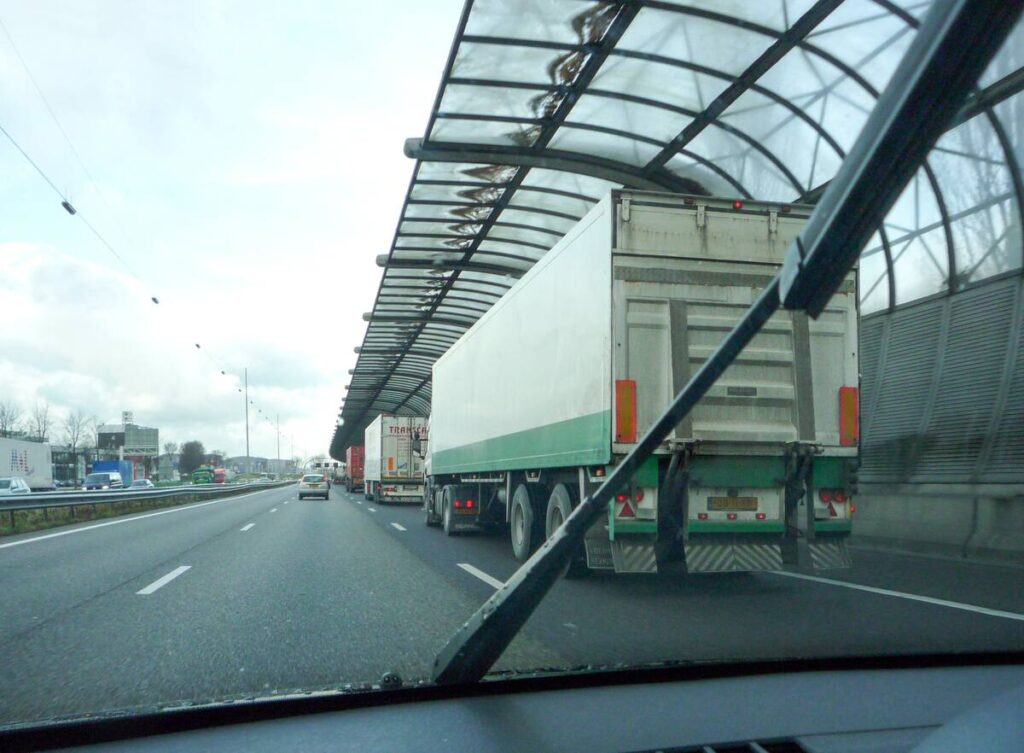
Solid barriers work by interrupting the sound path; their height, length, position and openings matter. They may help one listening position while doing little for an upper-storey window. The FHWA barrier guide explains these limitations. The cover photo shows a road barrier near Dordrecht in the Netherlands, not a domestic installation or a measured result for this article.
Living walls and green roofs also interact with sound, but their effects depend on the system. A BCIT study of living walls examined absorption and scattering, while green-roof field research investigated sound transmission through roof assemblies. Neither justifies promising one decibel reduction for all planted walls or roofs. Treat acoustic performance as something to design and verify, not an automatic extra from adding plants.
A sensible order of priorities
Identify the disturbance, address the source where possible, then choose between treatment inside the room and insulation along the transmission path. Start with a clear brief and request evidence for the proposed solution. A quieter home comes from matching the intervention to the problem, not from collecting materials labelled “acoustic”.
Cover: DeFacto, road noise barrier on the A16, CC BY-SA 4.0, resized and compressed. This English edition is an editorial adaptation with the technical sources linked throughout; it is not a construction specification.