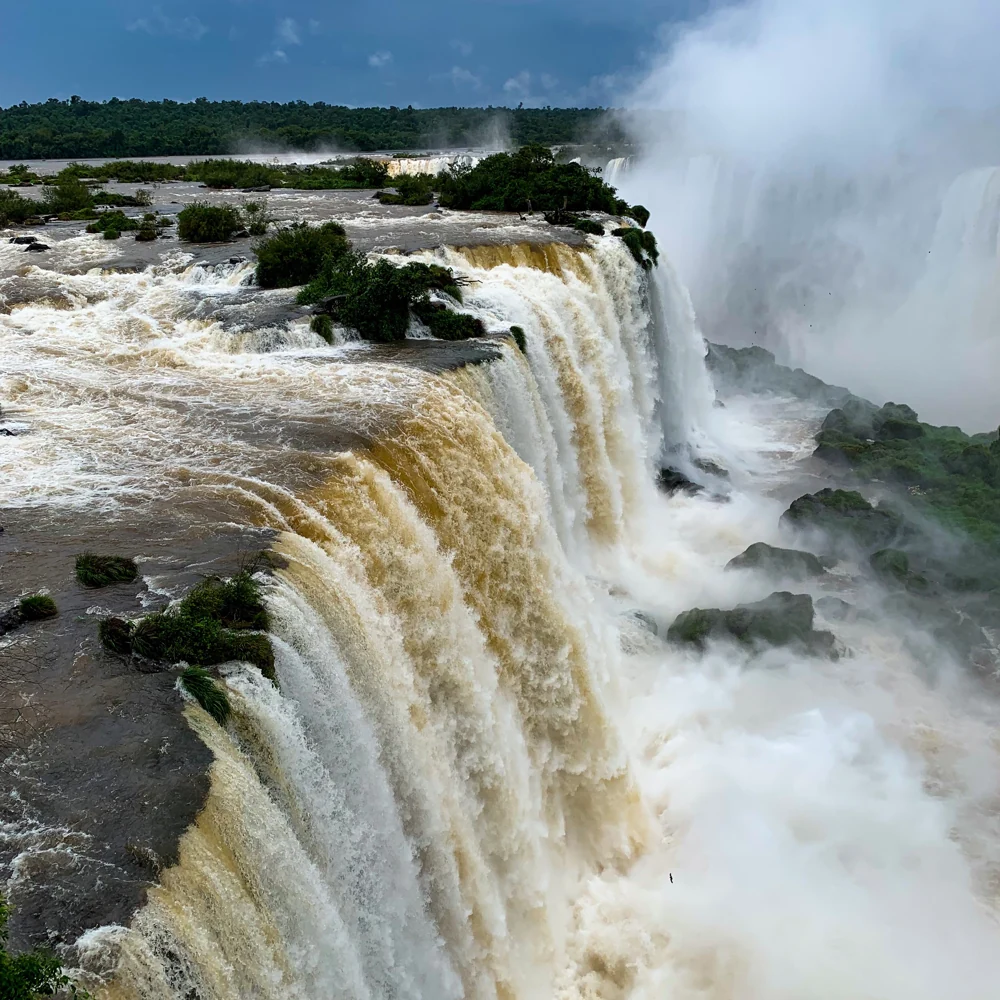
The waterfalls bring most visitors to Iguaçu: the roar, the spray and the extraordinary scale are hard to forget. Yet looking only at the water means missing much of what makes this place special. The surrounding Atlantic Forest is part of the experience, not simply a green backdrop.
For anyone interested in plants and gardens, a visit offers a chance to notice layers of vegetation, changing light and the connections between water and living things. Understanding a little of the park’s history also helps explain why visiting responsibly matters.
Where Iguaçu National Park is
The Brazilian park lies in western Paraná, on the border with Argentina. Across the river is Argentina’s Iguazú National Park. They protect adjoining landscapes but are separate parks, with their own entrances, administrations and visiting arrangements. A ticket or excursion on the Brazilian side should not be assumed to include the Argentine side. Plan border crossings, documents and transport separately.
UNESCO inscribed Iguaçu National Park on the World Heritage List in 1986. Its importance extends beyond the waterfalls to a large surviving area of inland Atlantic Forest. Seen together, the river, landforms and forest explain why protecting this landscape involves far more than maintaining a scenic viewpoint.
A protected landscape with a longer history
The national park was created on January 10, 1939. ICMBio’s historical account describes earlier proposals to protect the area, including the advocacy of André Rebouças. Conservation did not begin with a single isolated decision or one person’s actions.
Nor did the history of the territory begin with the decree. The landscape already had human and cultural significance long before it became a national park. Its administrative history is one layer of a much longer story, worth exploring through interpretation offered during the visit.
Today, public access and conservation must work together. Marked routes, monitoring, restrictions and occasional closures help manage that relationship. A closed path is not an invitation to find another way around the barrier for a photograph.
The Atlantic Forest beyond the falls
The park protects seasonal semideciduous forest. That technical name describes a forest in which some trees lose leaves during part of the year. Seasonal leaf loss is therefore not, by itself, evidence of damage or a dying forest.
The size and continuity of a forest remnant matter: wildlife movement and ecological processes depend on more than isolated patches of trees. Waterways are part of the same system. The protected landscape includes the Floriano River basin, highlighted in descriptions of the park’s conservation value. ICMBio’s biodiversity page provides further background.
Try observing the forest in layers. Start with the canopy, then look at the vegetation below it and the plants closer to the ground. Fallen leaves are not untidiness to be cleared away: leaf litter provides habitat and participates in nutrient recycling. A forest floor serves a different purpose from a swept garden path.
Along an authorized route, notice what changes where the canopy opens. Light, shade and the feeling of humidity can vary over a short distance. You do not need to identify every species to learn something. Photographs and notes about leaf shapes or growth habits are more useful than confidently guessing a name.
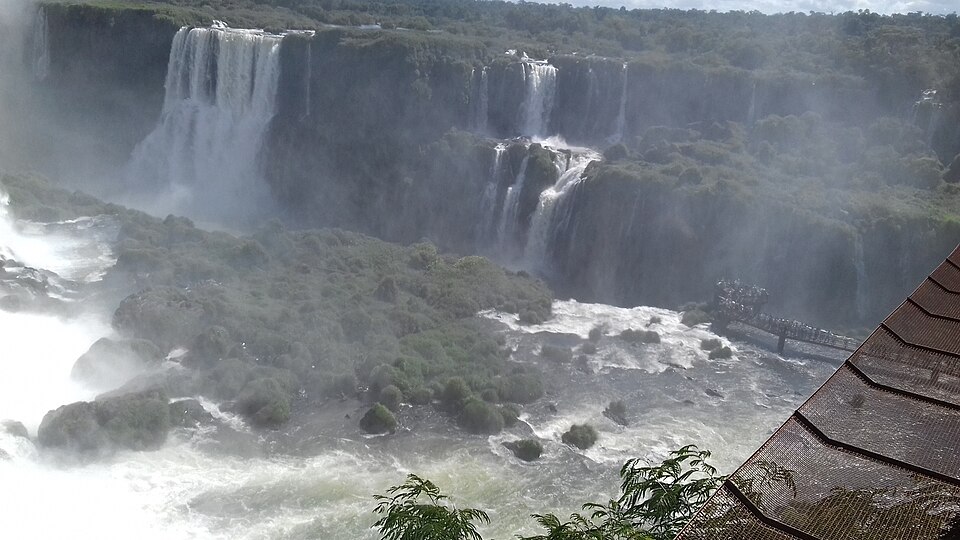

Give the waterfalls more than a quick photograph
Before taking a picture, pause to take in the whole scene: the width of the falls, the vegetation along the rock faces and the mist moving through the view. Then look for smaller details, such as islands, plants at the forest edge and the contrast between bright openings and shaded foliage.
The river’s flow and the appearance of the falls change with weather and water conditions. Photographs from another season cannot guarantee what a future visit will look like. Access can also change for safety reasons, so check official notices rather than planning around a single image seen online.
Sound is another part of the landscape. Where permitted routes offer the opportunity, compare the roar near the falls with a quieter stretch of forest. Stop only where there is room, without blocking stairs, narrow paths or other visitors.
Planning a visit to the Brazilian side
The Cataratas visitor area is the usual starting point for a first visit on the Brazilian side. Consult the official visitor guide and ticket information before booking. Check which routes, internal transport and services your ticket includes, and which experiences are sold separately.
Do not rely on an old screenshot of prices or opening times. Confirm the date, entry arrangements, documents for any concession, parking and travel time. If accessibility is important, ask about the specific route, equipment and assistance you need rather than assuming that every part of the park offers the same conditions.
A useful preparation checklist includes comfortable clothing, footwear suitable for wet surfaces, drinking water, sun protection and protection against splashes for belongings. Choose a pace that suits your group, especially children or older visitors. Leave some flexibility for weather and closures rather than packing every minute with activities.
Spray is part of the experience near the falls. Protect phones and cameras before reaching wet or crowded sections instead of stopping abruptly on steps or narrow walkways. Read the operator’s rules and visiting guidance.
Access note: when the official visitor guide was checked on November 17, 2026, it marked Caminho das Bananeiras as temporarily closed. This is a time-sensitive notice, not a permanent description of the route. Check the current guide before deciding where to walk.
Wildlife is not part of a staged attraction
Keep your distance from wild animals. Do not feed, touch or approach them for selfies. Keep food and rubbish secure: human food can encourage animals to approach people and create conflict. If an animal is on the path, give it space and follow staff guidance rather than trying to move it.
Take photographs from permitted routes and use zoom when necessary. Do not cross barriers, move vegetation or collect flowers, seeds, stones or leaves as souvenirs. Avoid sharing precise locations of vulnerable nests or other sensitive wildlife sites.
Specialist filming, equipment and commercial activities may have their own requirements. The right to use a photograph under a license is not permission to carry out a shoot inside the park. Check ICMBio’s image-use procedures where relevant. An ordinary visitor ticket does not automatically authorize drone flights or a production.
What a garden can learn from the forest
The most useful inspiration is not to squeeze a miniature forest into a small yard. It is to notice how different heights, shade and open spaces work together. At home, translate those observations into planting that fits the actual light, available space, ventilation and maintenance you can provide.
Start by checking direct sunlight, wind and drainage before choosing plants. A small number of suitable species usually makes more sense than a crowded collection. Buy from legitimate nurseries: observing a protected area is not permission to collect plants or accept specimens of doubtful origin. Our step-by-step landscape design guide explains how to turn those observations into a workable plan.
Different shades of green and quieter surfaces can give the eye somewhere to rest. Keep circulation clear. A water feature is optional, not a requirement for a natural-looking garden; consider water use, cleaning, sound and electrical safety before adding one.
Finally, learn to distinguish ordinary seasonal changes and aging leaves from a developing problem. Dated notes and photographs taken from the same spot can reveal patterns that are easy to miss when looking at a plant only once.
Common questions
Does visiting the Brazilian park include Argentina? No. Treat the two sides as separate visits, with their own tickets, transport and border-document requirements.
Will every walkway be open? That cannot be guaranteed. Weather, river conditions and safety decisions can affect access. Confirm current arrangements through official channels.
Can I bring home seeds or seedlings? Do not collect natural material in the park. Keep the memory in photographs and notes, not in a bag of plants or seeds.
How can I make the visit more botanical? Combine the waterfall viewpoints with careful observation along authorized routes. Record forms and questions without touching or removing material, and check whether interpretation or guided activities are available.
Practical information: the official visitor guide and UNESCO listing were checked on November 17, 2026. Prices, hours, routes and access conditions may change. Confirm current details before traveling.
Featured photograph: Iguaçu National Park, Karl.Vienna, Iguazu Falls Brazil.jpg, Wikimedia Commons, CC BY-SA 4.0. Cropped square, resized and converted to WebP. The adapted photograph remains under CC BY-SA 4.0.
